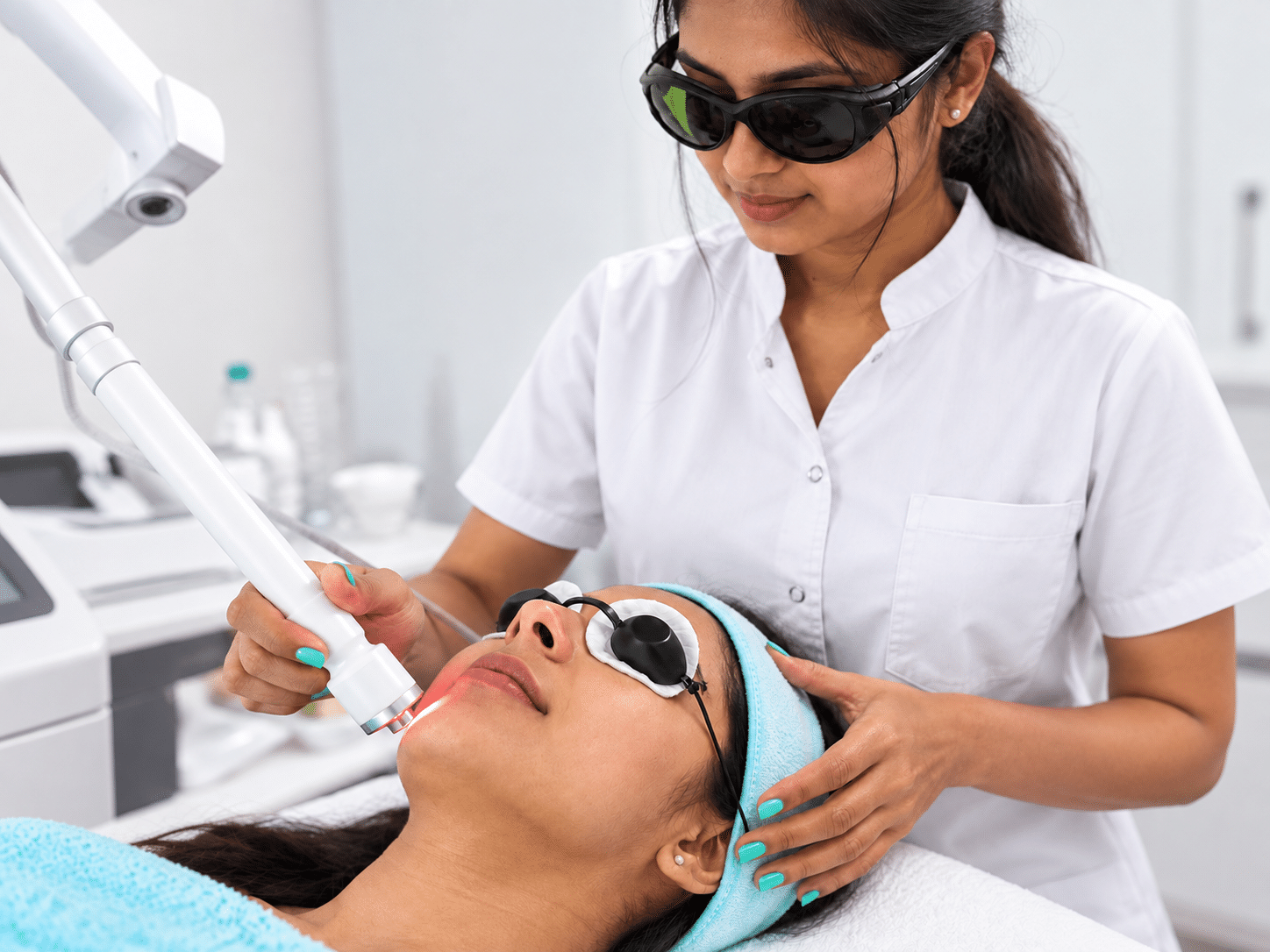
Q-Switch Nd:YAG Laser is an advanced laser treatment used to target pigmentation, uneven skin tone and selected skin concerns.
It delivers short, high-energy pulses of laser light that target pigment in the skin. This helps break down selected pigment, which the body gradually clears over time.
At Pure Derma, our dermatologist assesses your skin and pigmentation to recommend the right treatment for your concerns. Every skin is different, and the right approach begins with understanding your skin.
Helps improve the appearance of selected dark spots and pigmentation caused by excess pigment in the skin.
May help improve uneven skin tone and give the skin a more even, refreshed appearance when appropriately selected.
May help reduce the appearance of certain brown marks left after acne. Red marks and acne scars may need different treatments.
Q-Switch Nd:YAG Laser can be used to remove selected tattoos by breaking down tattoo ink into smaller particles that the body gradually clears.
May be used for certain skin rejuvenation concerns, depending on your dermatologist’s assessment and the laser settings
The laser delivers very short pulses of energy to the targeted area.
For pigmentation, the laser targets excess pigment in the skin and breaks it into smaller particles. Your body gradually clears these particles over time.
For tattoo removal, the laser targets tattoo ink, helping break it down so it can be cleared naturally.
Multiple sessions may be needed, depending on the concern and your skin’s response.
It is an advanced laser treatment that uses short pulses of energy to target selected pigmentation concerns, tattoo ink and certain skin conditions.
It may be used for:
The laser targets pigment in the skin or tattoo ink and breaks it into smaller particles. The body gradually clears these particles over time.
Yes, it may help improve selected pigmentation concerns. However, the cause of pigmentation matters, and not every type of pigmentation responds to the same laser.
It may be suitable for many Indian skin types when appropriately selected and performed.
Your dermatologist will assess your skin, pigmentation and tanning before recommending treatment.
You may feel a mild snapping, stinging or warming sensation during treatment.
Cooling or other comfort measures may be used to make the treatment more comfortable.
The number of sessions depends on your skin concern, pigmentation, treatment area and individual response.
Some concerns may need multiple sessions. Your dermatologist will recommend a suitable plan.
Results develop gradually as the skin heals and the body clears the targeted pigment.
Some improvement may be noticed after a session, but the final results depend on your concern and treatment plan.
Yes. It can be used for selected tattoos by breaking down tattoo ink.
Tattoo removal usually requires multiple sessions, and complete removal cannot be guaranteed.
It may help with certain brown marks left after acne.
However, red acne marks and depressed acne scars are different concerns and may require other treatments.
You may experience temporary redness, sensitivity or swelling after treatment.
Some pigmentation treatments may also cause temporary darkening or lightening of the treated area. Recovery varies.
Pigment changes are a possible risk, especially in darker skin types.
Your dermatologist will assess your skin and select suitable settings to help minimise risks.
It is generally considered safe when performed by a qualified professional using appropriate settings.
Temporary redness, swelling, discomfort and pigmentation changes may occur. Rarely, burns, blistering or scarring can happen.
