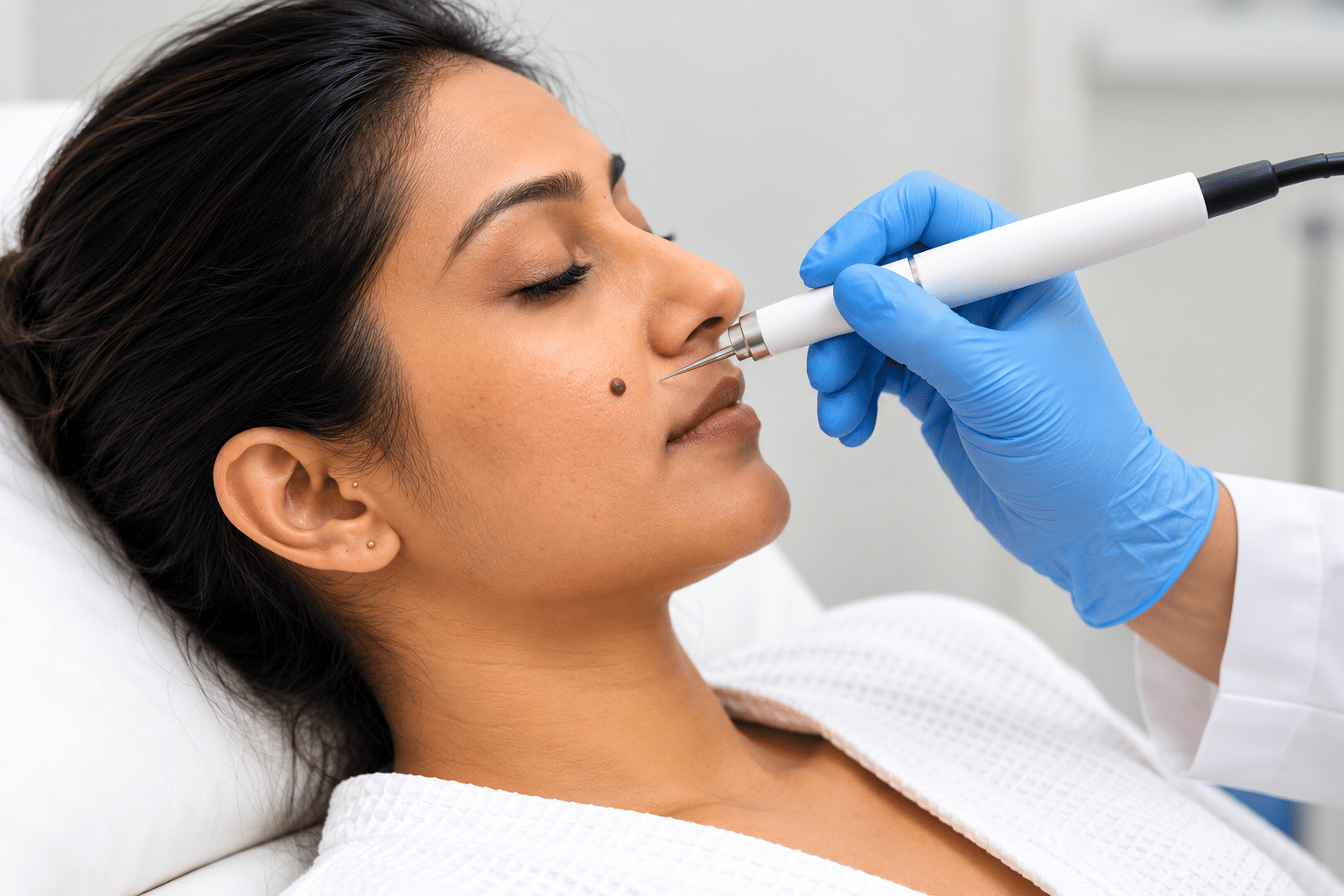
Electrocautery is a dermatological procedure that uses controlled heat to treat or remove certain unwanted skin growths and lesions.
During the procedure, a specialised device delivers controlled heat to the targeted area. Depending on the concern, this can help destroy or remove the unwanted tissue while allowing the surrounding skin to be treated as precisely as possible.
At Pure Derma, electrocautery is performed after a dermatologist evaluates the skin concern, its size, location and appearance. The treatment approach is then selected according to what is clinically appropriate for the individual patient.
Electrocautery may be used for selected concerns such as skin tags, certain warts and other superficial skin growths. Not every skin growth is suitable for electrocautery, which is why professional assessment is important.
Depending on the dermatologist’s assessment, EC may be used for:
Other lesions where electrocautery is considered clinically appropriate
The exact treatment method depends on the type, size and location of the lesio
At Pure Derma, electrocautery begins with a proper skin assessment rather than treating every growth in the same way.
Our dermatologist-led approach focuses on:
The right diagnosis comes before the right procedure.
Think of electrocautery as controlled heat used with precision.
The dermatologist uses a specialised tip to deliver heat to the targeted tissue. This causes the selected tissue to dry, coagulate or be destroyed, depending on the procedure being performed.
For some lesions, the dermatologist may combine cautery with another technique such as curettage, where the treated tissue is gently scraped away.
A local anaesthetic may be used to numb the treatment area. You may still feel some pressure or warmth during the procedure, but significant pain should be minimised.
The procedure time depends on the number, size and location of the lesions being treated. Small lesions can often be treated during a short clinic appointment.
There may be temporary redness, swelling, tenderness or a small crust at the treatment site. Recovery depends on the lesion and treatment depth.
Any procedure that removes or destroys skin tissue can potentially leave a mark or scar. The risk depends on the lesion, treatment depth, location and individual healing response.
Yes. Electrocautery or electrodesiccation can be used by dermatologists to remove suitable skin tags.
Yes, electrosurgery can be used for certain warts, including some common, plantar and filiform warts. The dermatologist decides whether it is appropriate for your particular wart.
No. Different skin growths require different treatments. Some lesions may need another procedure or further examination before removal.
Not every mole should be treated with electrocautery. A mole should first be assessed by a dermatologist, particularly if it has changed in appearance or raises any concern. Some lesions may require surgical removal and/or examination of the tissue.
It may be used for selected facial lesions, but the decision depends on the type, size and location of the lesion. Facial skin requires particularly careful treatment planning.
The area may look red, darker, swollen or crusted temporarily. The appearance changes as the skin heals.
Healing varies depending on the treatment. Some superficial treated areas can heal within a few weeks, while the colour and appearance of the skin may continue to settle for longer.
You may need to avoid makeup directly over the treated area until the skin has sufficiently healed. Your dermatologist will advise you based on the location and procedure.
Avoid picking or scratching the treated area. Follow your dermatologist’s instructions regarding cleansing, skincare, sun exposure and wound care.
Recurrence depends on the type of lesion and whether the treatment has completely addressed it. Some conditions, particularly viral warts, can recur or new lesions can appear because the underlying viral infection may persist.
Not necessarily. Your dermatologist will consider the type and location of the lesion, your medical history, medications and other relevant factors before recommending the procedure.
At Pure Derma, every procedure begins with understanding your skin.
Book a dermatologist consultation to find out whether Electrocautery is suitable for your concern.
Treatment suitability, recovery time and results vary from person to person. A dermatologist consultation is required before treatment.
