Skin tags are small, soft, benign skin growths that commonly appear in areas where skin rubs against skin or clothing, such as the neck, underarms, eyelids, groin and beneath the breasts. They are usually harmless and do not require treatment, but they can be removed when they are bothersome or cosmetically unwanted.
At Pure Derma, skin tag removal begins with a dermatological assessment to confirm that the growth is actually a skin tag and to determine the most appropriate removal technique.
Removal may be considered when skin tags:
The removal technique depends on the size, number and location of the skin tags.
Small skin tags can be carefully removed using sterile surgical scissors or a blade after appropriate preparation and, when needed, local anaesthesia.
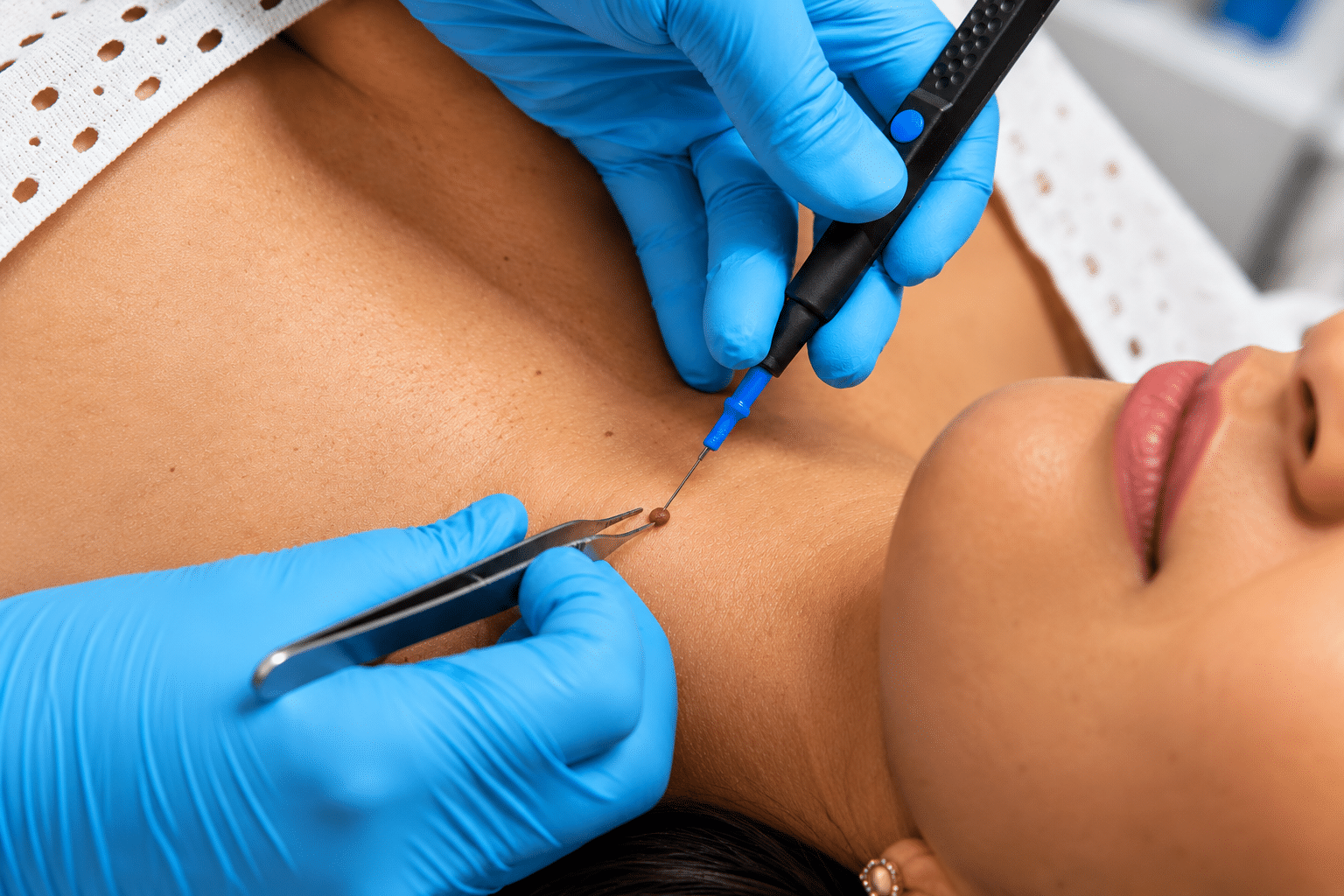
Controlled electrical energy can be used to remove or destroy selected skin tags. This can be particularly useful for smaller lesions.
Selected skin tags can be frozen using cryotherapy, causing the treated tissue to gradually fall away.
Your dermatologist will choose the appropriate method after examining the skin tag.
At Pure Derma, skin tag removal begins with correct identification of the lesion.
Not every small skin growth is a skin tag. If a lesion looks unusual, has changed, bleeds without obvious irritation or cannot be confidently identified, your dermatologist may recommend further evaluation before removal.
Once diagnosed, the appropriate technique is selected with attention to both effective removal and the appearance of the treated area.
Most skin tags are harmless and do not require treatment. However, a dermatologist should assess any growth that is changing, bleeding or looks unusual.
Skin tags commonly develop in areas where there is repeated friction between skin or between skin and clothing. They can become more common with age.
Yes. Skin tags can be removed when they are cosmetically bothersome, even when they are otherwise harmless.
There is no single best method for every skin tag. Snip removal, electrosurgery and cryotherapy may all be used depending on the size, location and characteristics of the lesion.
The level of discomfort depends on the technique and location. Local anaesthesia can be used when appropriate to make the procedure more comfortable.
Individual skin tags can often be removed during a short outpatient procedure. The time depends on the number and size of the skin tags being treated.
Yes, multiple skin tags can often be treated during the same visit. Your dermatologist will determine how many can be safely treated at once.
Any procedure involving the skin can potentially leave a mark or scar. The risk depends on the removal technique, size and location of the skin tag, as well as individual healing.
The treated skin tag itself is generally removed, but new skin tags can develop elsewhere. Removal does not necessarily prevent future skin tags from forming.
It is not recommended. Cutting a skin tag yourself can cause bleeding, infection and scarring. More importantly, a growth that looks like a skin tag may sometimes be another type of skin lesion and should be correctly identified first.
Yes, selected facial or eyelid skin tags can be treated, but these delicate areas require careful assessment and an appropriate technique.
A skin tag can bleed if it is repeatedly rubbed, scratched or caught on clothing or jewellery. A skin growth that bleeds without obvious trauma should be examined by a dermatologist.
Skin tags can be more common in people with certain metabolic conditions, including diabetes and insulin resistance, but the presence of a skin tag does not by itself diagnose any medical condition.
Healing varies according to the removal technique, size and location. Small treated areas generally heal over time with appropriate wound care.
A dermatologist can usually identify a typical skin tag through clinical examination. If the appearance is unusual or the diagnosis is uncertain, further evaluation may be recommended before removal.
At Pure Derma, skin tag removal is approached with careful diagnosis, precise treatment and personalised aftercare.
Disclaimer: Skin tag removal is a medical procedure and may involve temporary redness, bleeding, infection, pigmentation changes or scarring. Any unusual or changing skin growth should be assessed by a qualified dermatologist before removal.
