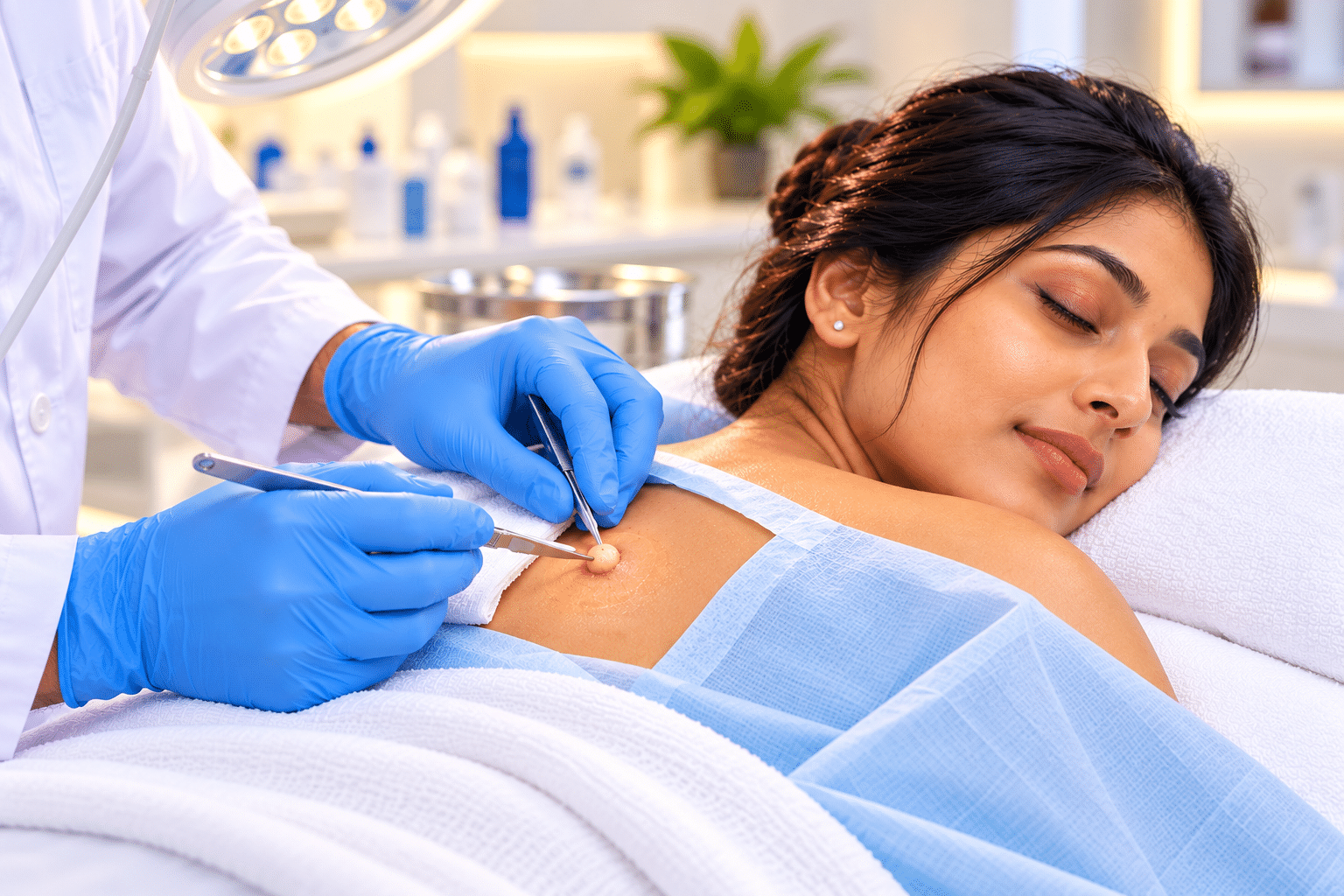
A “sebaceous cyst” is a common term often used for what is medically known as an epidermoid cyst. These are usually benign, slow-growing lumps beneath the skin, often containing keratin, and may appear on the face, neck, chest, back or other areas.
At Pure Derma, cyst removal begins with a dermatological assessment to confirm the nature of the lump and determine whether treatment is required. When removal is appropriate, complete excision of the cyst and its capsule can help reduce the chance of recurrence.
Removal may be considered when a cyst:
At Pure Derma, cyst removal starts with understanding what the lump actually is.
Not every lump beneath the skin is a cyst. Your dermatologist evaluates the lesion before recommending removal and selects an appropriate technique based on its characteristics.
When surgical removal is appropriate, the focus is on careful excision, appropriate wound care and consideration of the final cosmetic appearance.
“Sebaceous cyst” is a commonly used term for several types of skin cysts, although many are actually epidermoid cysts, which are filled mainly with keratin rather than sebum.
Most epidermoid cysts are benign. However, any lump that is rapidly changing, unusually firm, persistently painful or otherwise concerning should be assessed by a dermatologist.
No. Small, uncomplicated cysts that are not causing problems may not require treatment. Removal may be considered if the cyst is bothersome, recurrent, inflamed or cosmetically unwanted.
Yes. A cyst may be removed when its appearance is bothersome, provided the dermatologist confirms that removal is appropriate.
The area is generally numbed with local anaesthesia before the procedure. You may feel pressure or pulling, but significant discomfort is usually minimised.
The duration varies according to the size, location and complexity of the cyst. Many uncomplicated cysts can be removed as an outpatient procedure.
Possibly. Whether stitches are required depends on the size and location of the cyst and the type of removal performed.
Any procedure that involves an incision can leave a scar. The final appearance depends on the cyst, location, surgical technique and individual healing.
Yes, recurrence is possible, particularly if the cyst capsule is not completely removed or if the cyst has previously ruptured. Complete excision of the capsule can reduce the likelihood of recurrence.
An inflamed or infected cyst may first require treatment such as drainage or other medical management. Definitive excision is sometimes performed after the inflammation has settled.
No. Attempting to squeeze or puncture a cyst yourself can increase inflammation, cause infection or rupture the cyst contents into surrounding tissue.
Antibiotics are not automatically required for every red or swollen cyst because inflammation does not always mean bacterial infection. Treatment depends on the clinical assessment.
Yes. Depending on the clinical situation, the removed tissue may be sent for histopathological examination to confirm the diagnosis.
Yes. Several types of skin cysts can occur on the scalp, including epidermoid and trichilemmal cysts. The appropriate treatment depends on the type of cyst.
A consultation is the best starting point. Your dermatologist can determine whether the lump is a cyst, whether treatment is necessary and which removal method is appropriate.
At Pure Derma, cyst removal combines careful dermatological assessment with precise treatment and personalised aftercare.
Disclaimer: Cyst removal is a medical procedure and may involve bleeding, infection, scarring, recurrence or other complications. The appropriate treatment depends on the type and condition of the cyst and should be determined after clinical assessment by a qualified medical professional.
