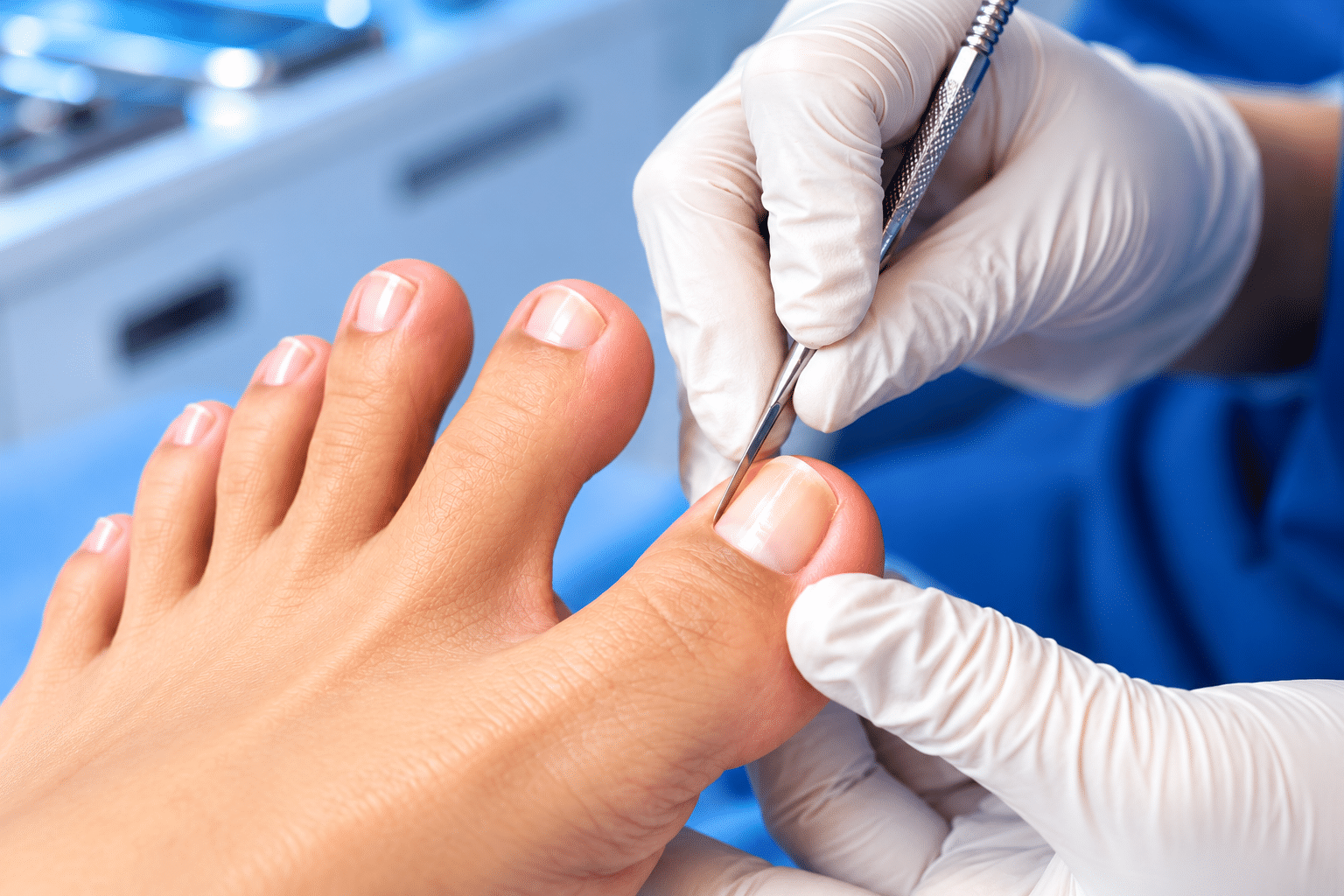
Nail avulsion is a medical procedure in which part or all of a fingernail or toenail is removed to treat certain nail conditions.
It may be recommended for a painful ingrown nail, a severely damaged or thickened nail, or selected nail infections when other treatments have not been effective. The procedure may involve partial or complete nail removal, depending on the condition.
At Pure Derma, nail avulsion is considered after a dermatological assessment to identify the cause of the nail problem and determine the most appropriate treatment.
Surgical repigmentation may be considered when:
The procedure is not necessary for every nail infection or ingrown nail. Your dermatologist will assess whether nail removal is appropriate.
It is the partial or complete removal of a nail plate by a medical professional to treat a specific nail condition.
It is a minor medical procedure performed using an appropriate clinical technique.
It may be recommended for an ingrown nail, significant nail damage, selected infections or other nail conditions that require removal.
Local anaesthesia is often used for surgical removal. Some discomfort or tenderness can occur during recovery.
Not always. Depending on the condition, only the affected edge or portion may need to be removed.
It often does if the nail-producing area remains intact. Regrowth depends on the underlying condition and the technique used.
The duration depends on whether partial or complete removal is needed and the complexity of the condition.
You may need to protect the affected finger or toe and temporarily limit activities that put pressure on it.
The nail bed may heal over several weeks, while full nail regrowth can take several months or longer, particularly for toenails.
Yes, partial nail removal may be recommended for selected ingrown toenails, depending on severity and recurrence.
Nail removal alone does not reliably eliminate a fungal infection. Additional antifungal treatment may be required.
Scarring is not usually the main concern, but changes in nail growth or nail shape can occur, particularly if the nail matrix is affected.
Keep the dressing and area clean as instructed, protect the nail bed and follow your dermatologist's wound-care guidance.
Possible risks include pain, bleeding, infection, delayed healing and changes in nail growth or appearance.
No. Your dermatologist will consider the nail condition, circulation, medical history and other relevant factors before recommending the procedure.
Book a consultation at Pure Derma for a professional assessment of painful, damaged or problematic nails.
Disclaimer : Nail avulsion is a medical procedure. The technique, healing time and nail regrowth vary according to the condition and treatment performed.
