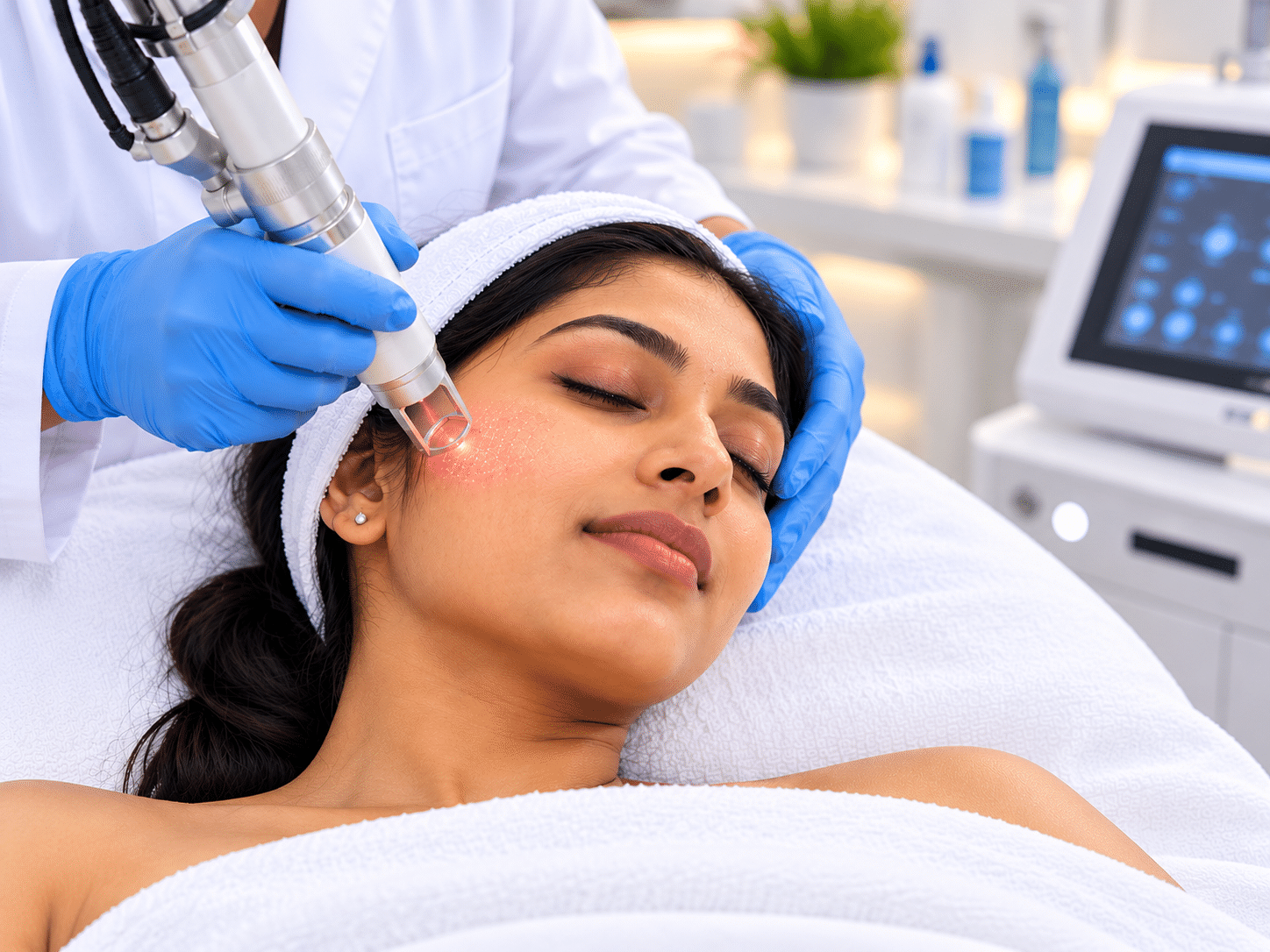
CO₂ laser treatment is an advanced dermatological procedure used to improve skin texture, reduce the appearance of acne scars, soften fine lines, and address selected skin irregularities. It uses carbon dioxide laser energy to remove or resurface targeted layers of skin and stimulate the skin’s natural healing process.
At Pure Derma, CO₂ laser treatment is recommended following a detailed skin assessment to determine whether the procedure is suitable for your skin type, concern, and treatment goals.
CO₂ laser treatment may be considered for:
Suitability depends on the type of concern, skin condition, and the treatment technique selected.
Results vary depending on the skin concern, treatment intensity, and individual healing response.
Recovery depends on whether fractional or fully ablative CO₂ laser treatment is performed and the intensity of the procedure. Redness, swelling, crusting, and peeling may occur during healing.
Temporary or persistent changes in skin pigmentation, infection, and scarring are possible complications. These risks should be discussed before treatment, particularly for skin tones prone to post-inflammatory pigmentation.
At Pure Derma, the focus is on personalised dermatological care, appropriate treatment selection, and informed guidance throughout the procedure and recovery process. Each treatment plan is based on an assessment of your skin concerns, skin type, and expected outcomes.
CO₂ laser technology delivers controlled laser energy to the targeted skin area. Depending on the technique used, it removes damaged skin layers and stimulates collagen production during the healing process. This can gradually improve skin texture, the appearance of scars, and overall skin smoothness.
The treatment may be performed using fractional or fully ablative techniques, depending on the clinical indication and the dermatologist’s recommendation.
CO₂ laser treatment is a skin-resurfacing procedure that uses carbon dioxide laser energy to improve selected concerns, including acne scars, fine lines, and uneven skin texture.
It may improve the appearance of certain acne scars. Results depend on the scar type, depth, skin characteristics, and treatment approach.
Yes. It can help improve uneven skin texture by resurfacing targeted skin layers and stimulating collagen remodelling.
No. Suitability depends on your skin tone, medical history, and risk of pigmentation changes or scarring. A dermatologist must assess your skin before treatment.
Discomfort varies with the treatment intensity and area. Topical or other appropriate anaesthesia may be used to improve comfort.
The duration depends on the size of the treatment area, the concern being addressed, and the technique used. Your dermatologist can provide an estimate during consultation.
Some concerns may improve after one session, while others may require multiple treatments. The recommended number depends on your skin condition and response.
Recovery varies according to the laser technique and intensity. Fractional treatments may involve several days of visible healing, while fully ablative treatments can require a longer recovery period.
Early improvements may become visible after the skin heals. Collagen remodelling can continue over the following weeks and months, so results develop gradually.
Complete removal cannot be guaranteed. Treatment may reduce the appearance of scars and improve skin texture, but the degree of improvement varies.
It may help soften certain fine lines and improve skin texture. The outcome depends on the severity of the concern and the treatment selected.
Makeup should be avoided until the skin has sufficiently healed and your dermatologist confirms it is safe to resume.
Follow the prescribed aftercare routine, protect your skin from sunlight, avoid picking the treated area, and pause irritating skincare products until advised otherwise.
People with certain active skin infections, impaired wound healing, a history of problematic scarring, or other relevant medical conditions may not be suitable candidates. A dermatologist should review your medical history and current skin condition before recommending treatment.
