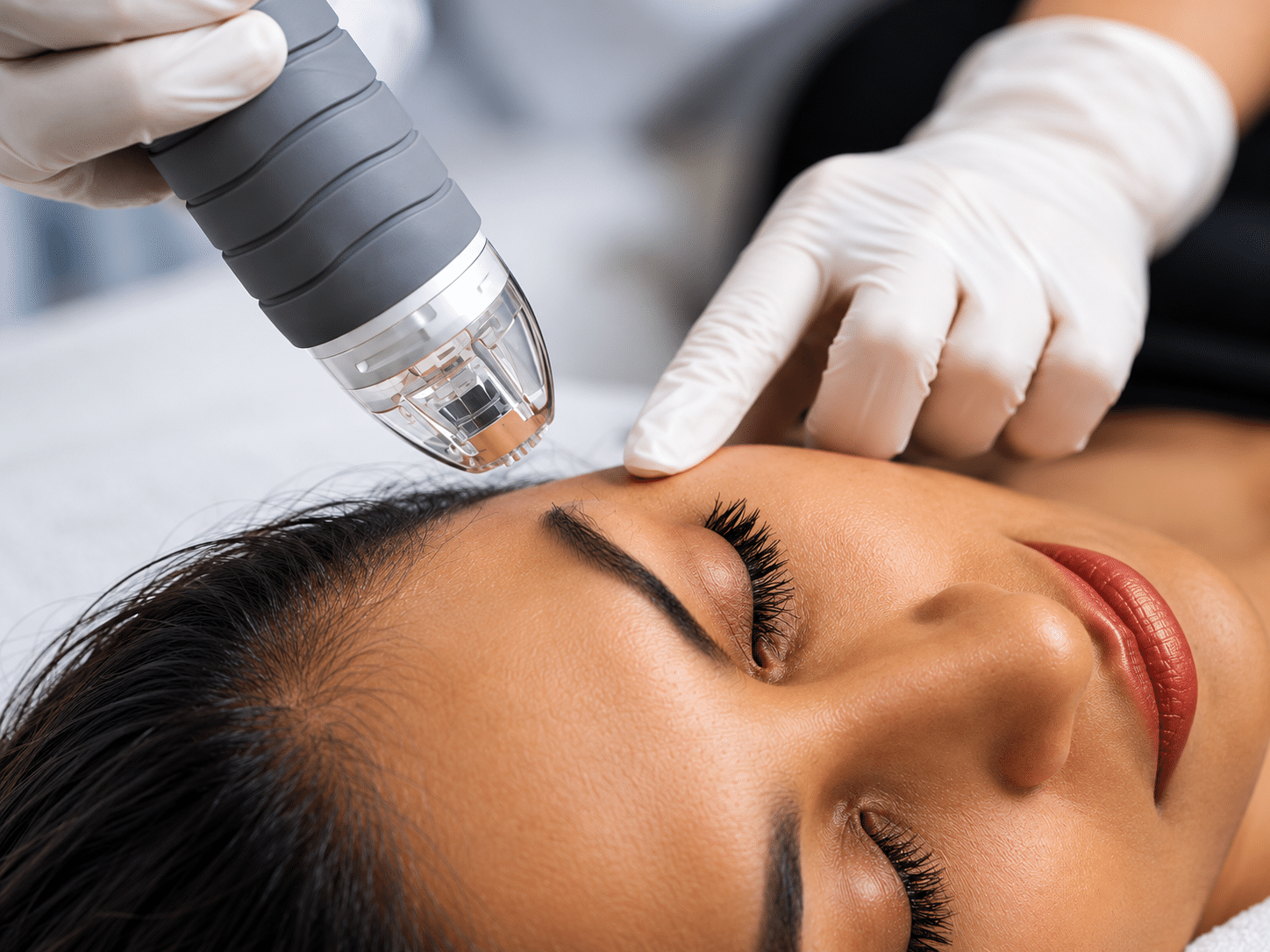
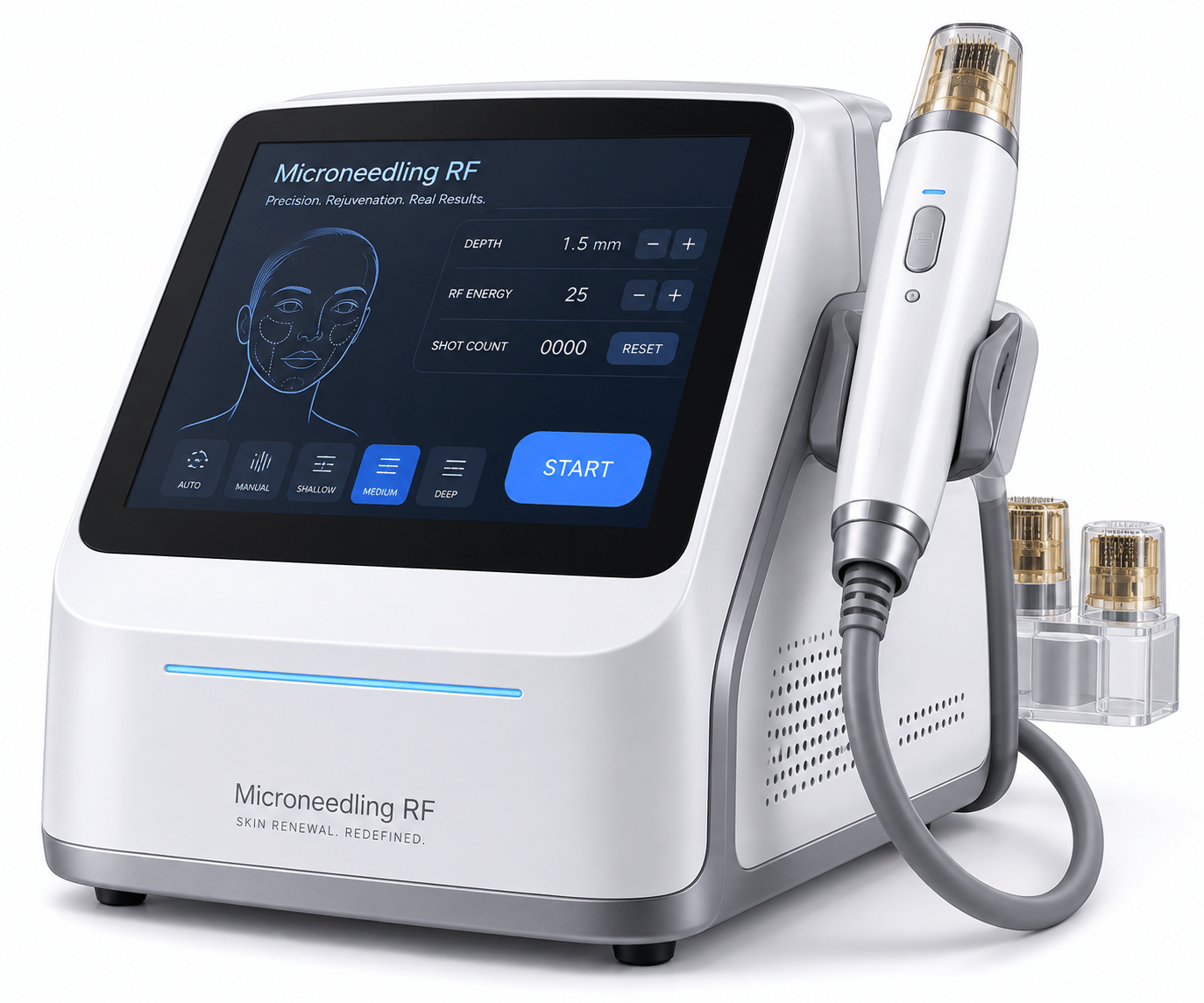
MNRF, or Microneedling Radiofrequency, is an advanced skin treatment that helps improve skin texture, acne scars, open pores, and mild skin looseness.
It combines two technologies:
Together, they encourage the skin to produce more collagen, the natural protein that helps keep skin firm, smooth, and healthy-looking.
MNRF may help improve the appearance of:
The device uses very fine needles to reach specific layers of the skin. Radiofrequency energy then creates controlled heat beneath the surface.
This activates the skin’s natural repair process and supports new collagen formation.
In simple words: MNRF helps the skin rebuild and refresh itself from within.
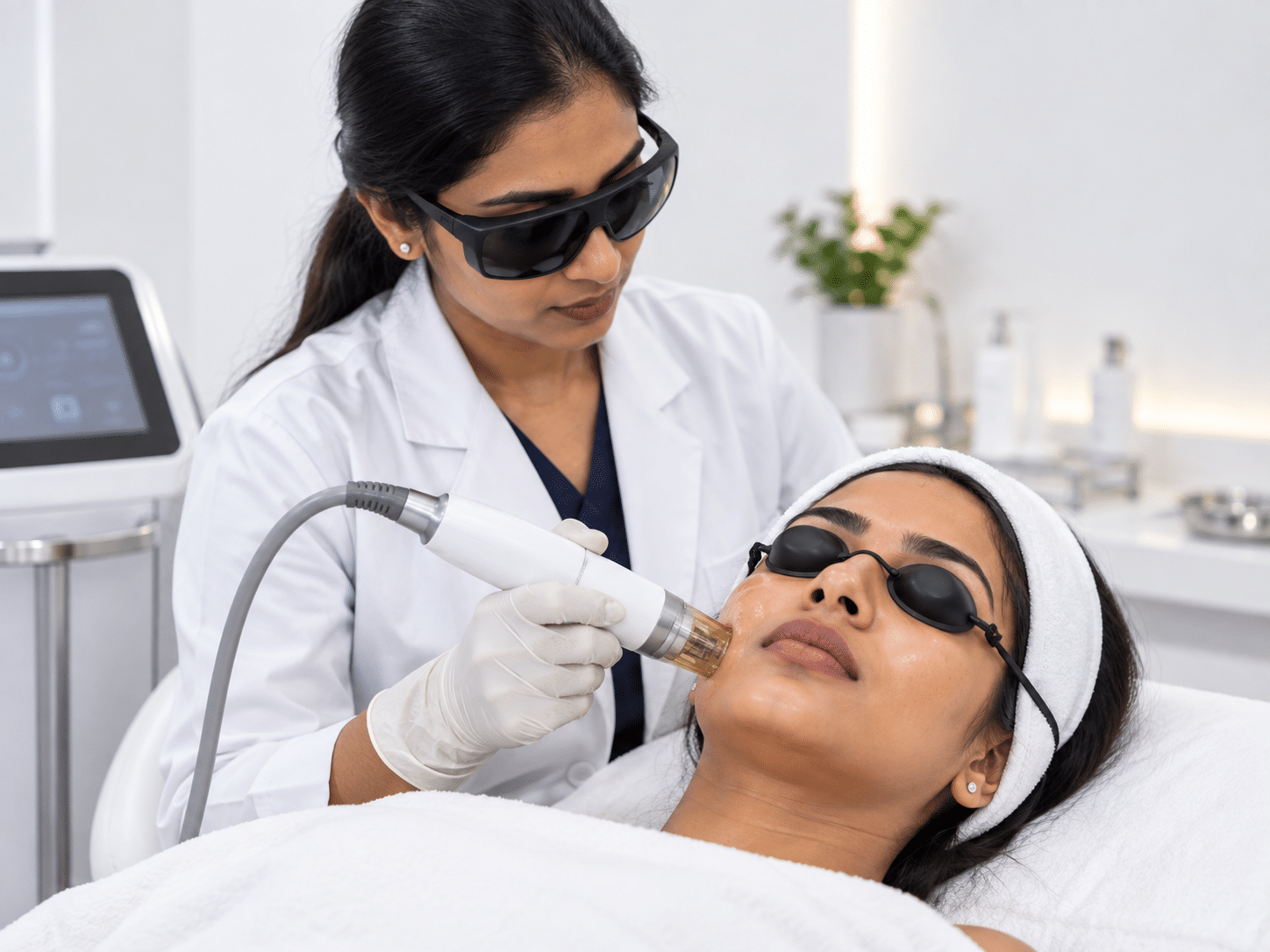
MNRF is generally safe when performed by a trained medical professional using suitable settings and sterile equipment.
A numbing cream is usually applied before treatment. You may feel mild pricking, pressure, or warmth.
A session usually takes around 45–90 minutes, depending on the area being treated.
The number of sessions depends on your skin concern and the results you want. Your dermatologist will recommend a suitable plan.
Results develop gradually as the skin produces new collagen. Improvement may become noticeable over the following weeks.
Yes, MNRF can help improve the appearance of certain types of acne scars. The results depend on the type and depth of the scars.
MNRF may help make enlarged pores look less noticeable by improving skin texture and collagen support.
You may experience redness, warmth, swelling, or tiny marks for a short period after treatment. Recovery varies from person to person.
It may be possible, but treatment settings need to be selected carefully after a dermatologist’s assessment.
It may help with certain brown marks left after acne.
However, red acne marks and depressed acne scars are different concerns and may require other treatments.
You may experience temporary redness, sensitivity or swelling after treatment.
Some pigmentation treatments may also cause temporary darkening or lightening of the treated area. Recovery varies.
MNRF is not suitable for every pigmentation concern. Your dermatologist will decide whether it is appropriate for your skin.
Pigment changes are a possible risk, especially in darker skin types.
Your dermatologist will assess your skin and select suitable settings to help minimise risks.
Yes, it may be used for selected concerns such as stretch marks and mild skin looseness.
You may need to avoid makeup for a short period after treatment. Follow the aftercare instructions provided by your dermatologist.
Avoid strong skincare products, scrubbing, excessive heat, direct sun exposure, and picking or touching the treated area.
No. Microneedling uses tiny needles, while MNRF combines microneedling with radiofrequency energy.
MNRF may not be suitable for people with certain active skin infections, healing problems, or specific medical conditions. Your dermatologist will assess your suitability.
