
PRP (Platelet-Rich Plasma) and GFC (Growth Factor Concentrate) are regenerative hair treatments that use components derived from your own blood and are designed to support existing hair follicles.
They are most commonly considered as part of a treatment plan for pattern hair loss and selected types of hair thinning. PRP has shown potential to improve hair density in some studies, although results can vary because treatment protocols and preparation methods are not yet fully standardized.
At Pure Derma, PRP or GFC is recommended only after assessing the underlying cause and pattern of hair loss.
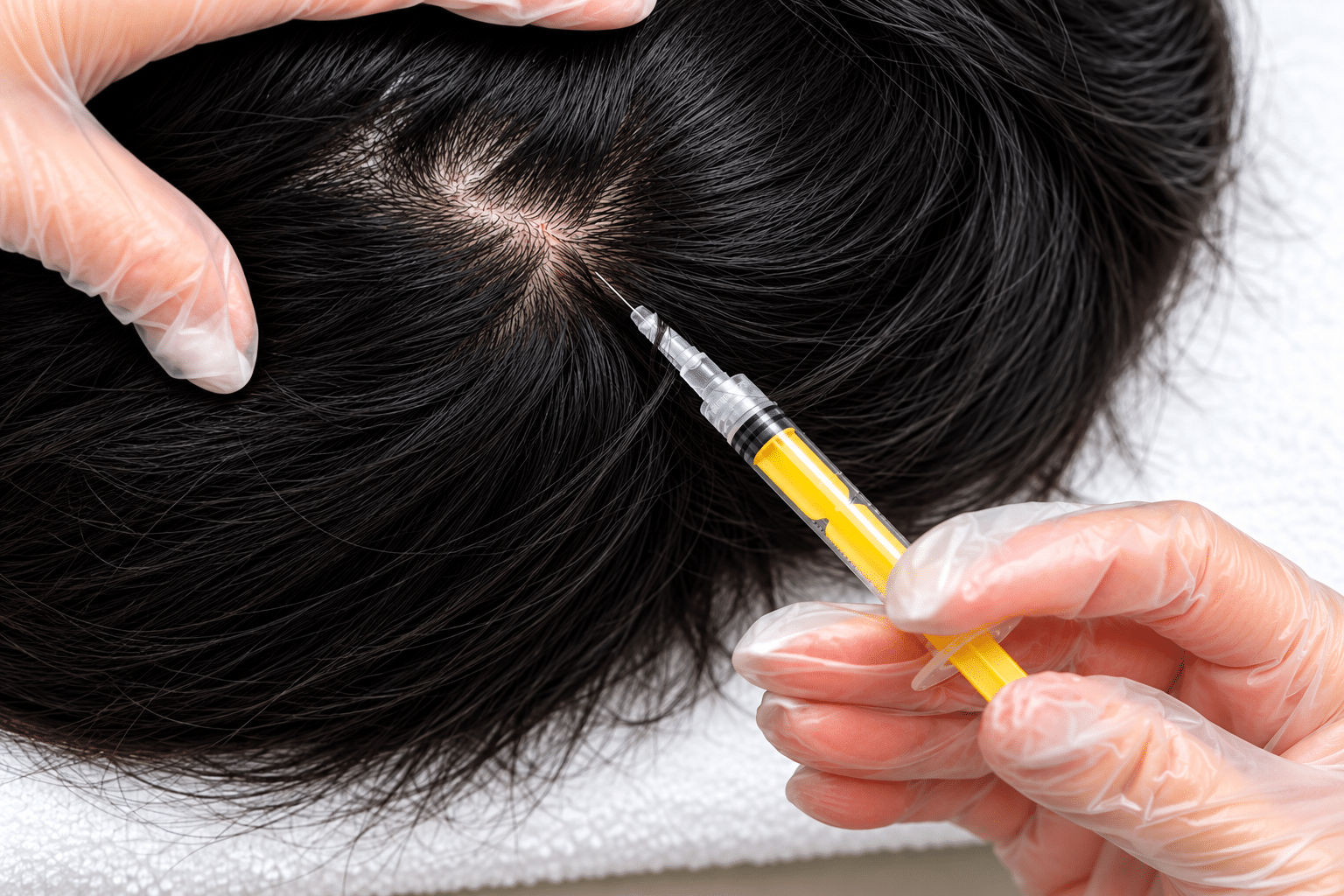
These treatments may be considered for:
They are generally intended to support existing follicles, rather than create new follicles in areas where follicles are permanently absent.
Platelets contain growth factors involved in tissue repair and signalling. Research suggests PRP may improve hair density in androgenetic alopecia, although the quality of evidence and treatment protocols vary.
At Pure Derma, hair treatment starts with identifying the cause and pattern of hair loss.
PRP or GFC is not treated as a one-size-fits-all solution. Your dermatologist assesses your scalp and hair, discusses your medical history and determines whether regenerative therapy is appropriate. Where required, it can be combined with other evidence-based approaches for a more comprehensive treatment plan.
Yes. PRP is prepared from a small sample of your own blood, which is processed to concentrate the platelet-rich component before it is injected into the scalp.
Autologous GFC treatments use growth-factor concentrates derived from the patient’s own blood. The exact preparation method can vary between protocols.
PRP has been studied most extensively for androgenetic alopecia, also known as male or female pattern hair loss. It may not be appropriate for every type of hair loss, which is why diagnosis is important.
No treatment can guarantee that hair fall will stop completely. The response depends on the underlying cause, stage of hair loss and individual factors.
PRP is generally intended to support existing or weakened follicles. It should not be presented as a way to reliably recreate follicles that have been permanently lost.
The treatment schedule varies according to your diagnosis, degree of hair loss and response to treatment. Your dermatologist will recommend an appropriate protocol after assessment. AAD notes that PRP commonly involves an initial series followed by maintenance treatments for some patients.
The treatment schedule varies according to your diagnosis, degree of hair loss and response to treatment. Your dermatologist will recommend an appropriate protocol after assessment. AAD notes that PRP commonly involves an initial series followed by maintenance treatments for some patients.
You may experience brief discomfort or a pinching sensation during scalp injections. Numbing measures can be used when appropriate.
Most patients can return to their normal routine relatively quickly. Temporary scalp tenderness, redness or swelling may occur.
Temporary soreness, redness, swelling, bruising or headache can occur after injections. Your dermatologist will discuss the potential risks before treatment.
There is currently not enough high-quality evidence to say that one is universally better than the other. Research comparing growth-factor preparations is still developing, and outcomes can depend on the specific protocol used.
Yes, they may be incorporated into a broader hair-loss treatment plan when appropriate. Your dermatologist will decide which combination is suitable based on your diagnosis and medical history.
Yes. These treatments have been studied in both male and female pattern hair loss. However, the cause of hair loss should be evaluated before treatment.
Possibly. Hair loss can be a chronic or progressive condition, and any improvement from regenerative treatment may require maintenance to help sustain results. The schedule depends on your individual response.
A dermatologist consultation is the best starting point. Your doctor can determine the type and cause of your hair loss and decide whether PRP, GFC, medication, scalp treatment or a combination approach is appropriate.
Support your hair journey with a personalised, dermatologist-guided approach at Pure Derma.
Disclaimer: PRP and GFC are medical procedures and are not suitable for every type of hair loss. Results vary depending on the underlying cause, stage of hair loss and individual response. A dermatologist consultation is recommended before treatment.
