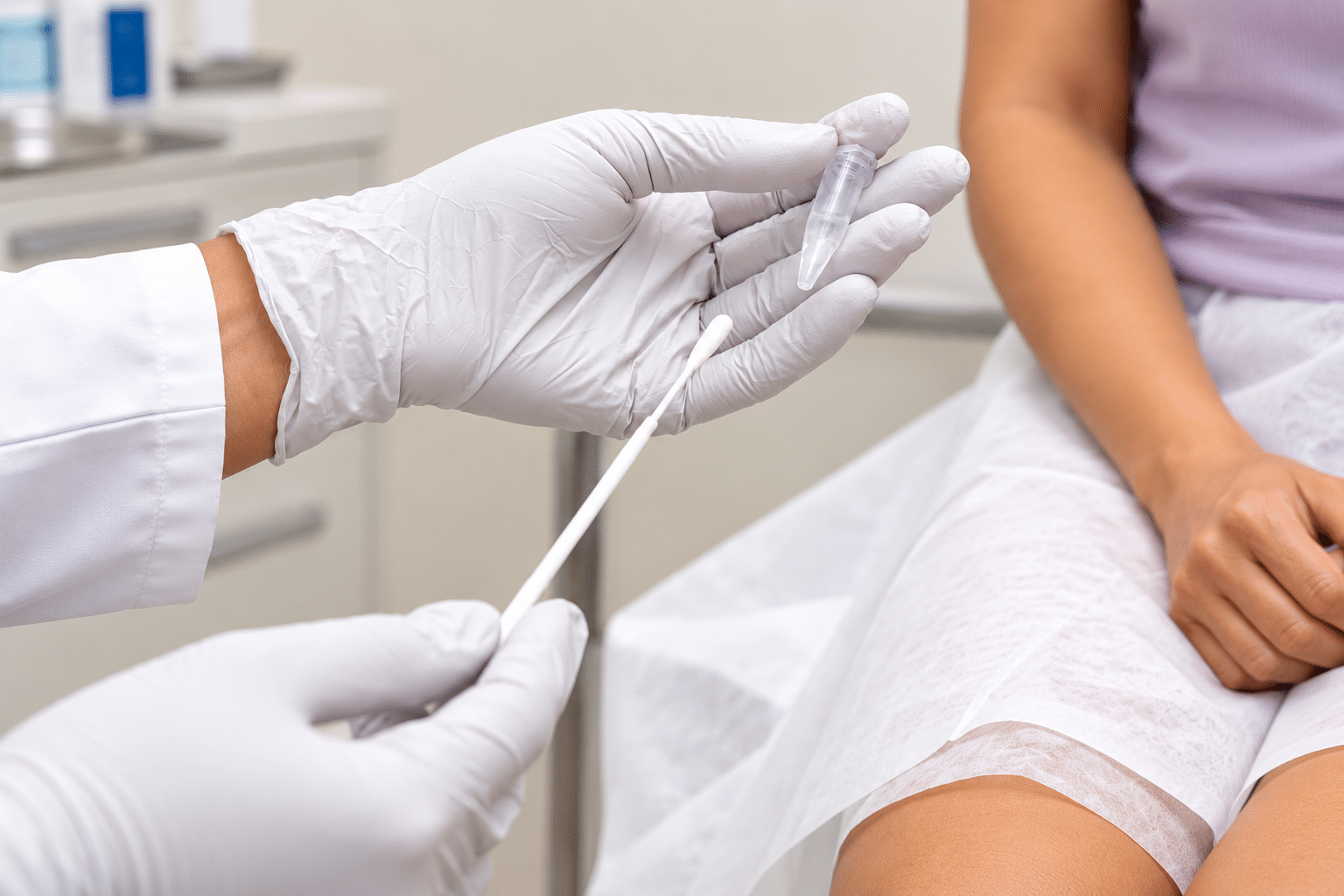
A skin biopsy is a diagnostic procedure in which a small sample of skin, or sometimes an entire lesion, is removed and examined under a microscope. It helps a dermatologist identify the cause of an unusual skin lesion, persistent rash, growth, pigmentation change or other unexplained skin concern.
A biopsy may be recommended when a diagnosis cannot be confirmed through a clinical examination alone or when a lesion needs to be checked for abnormal or cancerous cells.
At Pure Derma, every biopsy begins with a detailed dermatological assessment. The biopsy technique is selected according to the type, size, location and appearance of the skin concern.
A dermatologist may recommend a biopsy for:
A small circular instrument removes a cylindrical sample containing several layers of skin. It is commonly used for rashes, inflammatory conditions and selected lesions.
A superficial portion of the lesion is removed using a sterile blade. It may be suitable for certain raised or superficial lesions.
The entire lesion is removed, sometimes with a small margin of surrounding skin. This may be recommended when complete removal is necessary for diagnosis.
Only a portion of a larger lesion is removed when taking the entire lesion is not necessary or practical.
At Pure Derma, diagnosis comes before treatment.
Your dermatologist carefully evaluates the skin concern before deciding whether a biopsy is required and which technique would provide the most useful tissue sample. The sample is then examined through histopathology to help establish the diagnosis and guide further care.
When Your Skin Needs an Answer, Start With the Right Diagnosis.
A biopsy does not mean that a lesion is cancerous. It is a diagnostic tool used to understand what is happening within the skin.
A skin biopsy is a procedure in which a small piece of skin or an entire skin lesion is removed and examined under a microscope to help determine its diagnosis.
A biopsy may be recommended when a dermatologist needs more information to diagnose an unusual mole, skin growth, persistent rash, pigmentation change or suspected skin condition.
No. A biopsy is a diagnostic procedure, not a diagnosis of cancer. It can be used to investigate many benign, inflammatory and other skin conditions.
The area is usually numbed with local anaesthesia before the procedure. You may feel a brief injection when the anaesthetic is administered, followed by pressure or movement during the biopsy.
Most skin biopsies are relatively quick outpatient procedures. The exact duration depends on the type, size and location of the lesion.
It depends on the biopsy technique. Punch and excisional biopsies may require stitches, while some superficial shave biopsies may heal without them.
Any procedure that removes skin can potentially leave a scar. The final appearance depends on the biopsy technique, location, size of the wound and individual healing.
The sample is preserved and sent to a pathology laboratory, where it is examined under a microscope by a pathologist.
The time can vary depending on the type of tissue examination required and the laboratory. Your clinic can provide an expected reporting timeline.
Sometimes. An excisional biopsy removes the entire lesion when clinically appropriate. Other biopsy techniques remove only a portion or superficial section.
Yes. Most skin biopsies are performed as outpatient procedures, so you can generally return home after the procedure with appropriate wound-care instructions.
Keep the area clean and follow the wound-care instructions provided by your dermatologist. Avoid unnecessary rubbing, picking or trauma to the treated area.
Yes. Biopsies can be performed on the face when medically indicated. The technique is selected carefully according to the location and the type of lesion.
Yes. Histopathological examination of a biopsy can help identify abnormal or cancerous cells and determine the type of skin cancer when present.
Yes. Histopathological examination of a biopsy can help identify abnormal or cancerous cells and determine the type of skin cancer when present.
At Pure Derma, expert dermatological assessment and appropriate diagnostic procedures help turn uncertainty into a clear treatment plan.
Disclaimer: A skin biopsy is a medical procedure and may involve temporary bleeding, discomfort, infection, pigmentation changes or scarring. The need for a biopsy and the appropriate technique are determined after clinical assessment by a qualified medical professional.
