
Vitiligo surgery is a specialised treatment option for selected people with stable vitiligo, particularly when other treatments have not provided adequate repigmentation.
The procedure involves transferring pigment-producing cells, or pigment-containing skin, from an unaffected area of the body to areas affected by vitiligo. The goal is to restore pigmentation and achieve a closer colour match with the surrounding skin.
At Pure Derma, suitability for vitiligo surgery is assessed carefully based on disease stability, the location and size of the patches, previous treatments and individual expectations.
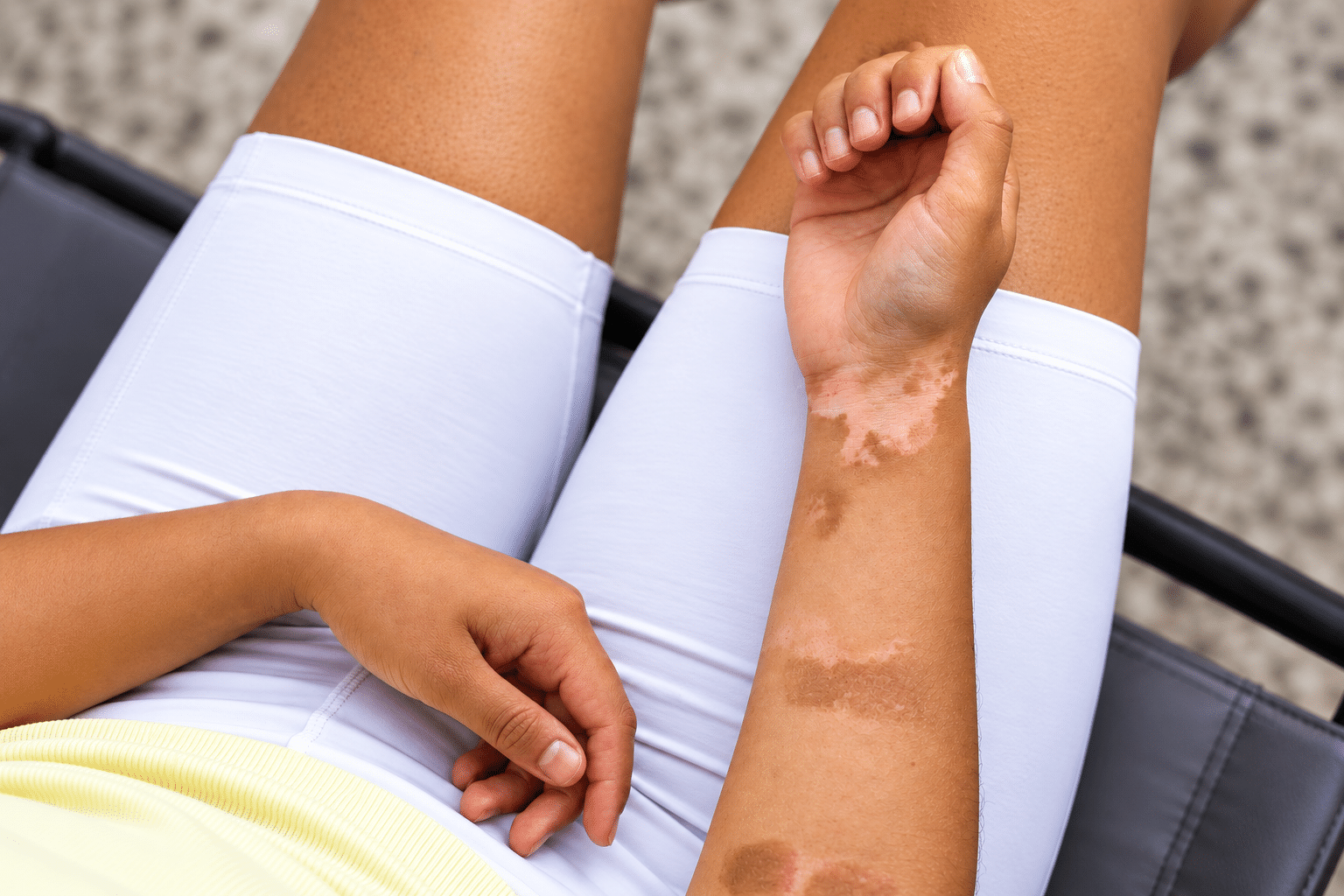
Surgical repigmentation may be considered when:
However, complete or permanent repigmentation cannot be guaranteed, and outcomes vary according to the type of vitiligo, treatment area and individual response.
A small amount of normally pigmented skin is taken from a donor area and transferred to the depigmented area.
Depending on the case, techniques may include:
Instead of transferring pieces of skin, pigment-producing cells are prepared from a small donor sample and transplanted into the affected area.
One approach is non-cultured melanocyte-keratinocyte cell suspension transplantation, which can be considered for selected stable vitiligo cases.
At Pure Derma, vitiligo surgery begins with determining whether your vitiligo is stable and suitable for surgical repigmentation.
Your dermatologist evaluates the pattern and activity of the disease before recommending a procedure. The treatment technique is then selected according to the affected area, extent of pigmentation loss and individual goals.
The focus is not simply on adding pigment, but on achieving a natural-looking and balanced colour match wherever possible.
A biopsy does not mean that a lesion is cancerous. It is a diagnostic tool used to understand what is happening within the skin.
Vitiligo surgery is a repigmentation procedure in which pigment-producing cells or normally pigmented skin are transferred to areas affected by vitiligo.
No. It is generally considered for carefully selected patients, particularly those with stable vitiligo.
Stable vitiligo generally means that there have been no significant new patches or enlargement of existing patches for a period determined by the treating dermatologist. Stability is an important factor when considering surgery.
Surgery is generally avoided while vitiligo is actively progressing because new depigmentation can affect the outcome. The underlying activity may need to be controlled first.
No. Surgery aims to restore pigmentation in selected affected areas. It does not cure the underlying autoimmune condition, and repigmentation may not remain permanent in every patient.
Depending on the technique, a small piece of normally pigmented skin may be removed or a small sample may be processed to obtain pigment-producing cells.
The donor site depends on the procedure and individual anatomy. Your dermatologist selects an area that provides suitable pigmentation while keeping the donor-site impact as minimal as possible.
The procedure is generally performed under local anaesthesia. Some discomfort, tightness or tenderness may occur during the healing period.
Repigmentation develops gradually. With cell-transplant procedures, much of the repigmentation may become visible over several months, although the timeline varies between individuals.
Selected facial areas can be treated. The response can vary depending on the location, extent and type of vitiligo.
Hands and feet can be more challenging treatment areas and may respond less predictably than some other body sites. Suitability is assessed individually.
Repigmentation can fade or new areas of vitiligo can develop because surgery does not remove the underlying cause of vitiligo. Long-term results vary between individuals.
Potential complications include infection, graft failure, colour mismatch, changes in pigmentation and scarring. Some grafting techniques can also cause textural changes or a cobblestone appearance.
Yes. Depending on the individual case, dermatologists may use surgery alongside other vitiligo treatments to support repigmentation and manage disease activity.
A detailed consultation is essential. Your dermatologist will assess whether your vitiligo is stable, the location and extent of the patches, previous treatment response and whether the expected benefits justify the procedure.
At Pure Derma, vitiligo surgery is approached with careful patient selection, personalised treatment planning and realistic expectations.
Disclaimer: Vitiligo surgery is a specialised medical procedure and is not suitable for every patient. Results vary depending on disease stability, treatment area, surgical technique and individual response. A qualified dermatologist should assess suitability before treatment.
