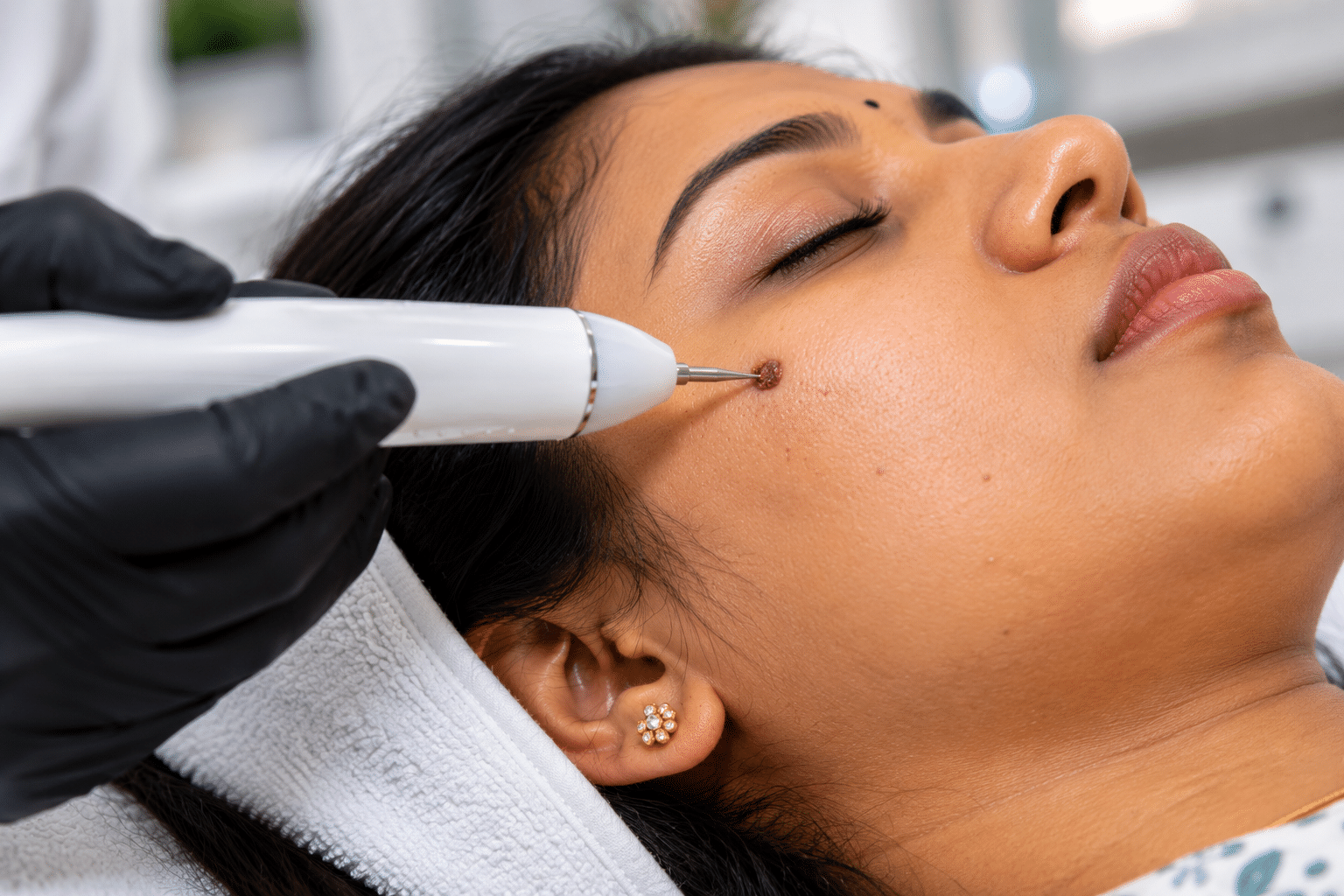
Warts are common skin growths caused by certain types of human papillomavirus (HPV). They can appear on the hands, feet, face and other areas of the body and may spread to nearby skin or other people. Although many warts are harmless and can eventually disappear on their own, treatment can help remove bothersome or persistent warts.
At Pure Derma, wart removal begins with a dermatological assessment to confirm that the growth is a wart and to determine the most appropriate treatment based on its type, size and location.
Wart treatment may be considered for:
If a growth looks unusual, changes rapidly, bleeds or does not respond to treatment, your dermatologist may recommend further evaluation or a biopsy to confirm the diagnosis.
The wart is frozen using a very cold substance, usually liquid nitrogen. The treated wart may blister or crust before gradually clearing. Multiple sessions may be required.
Controlled heat is used to destroy the wart. It may be combined with curettage, where the wart is carefully scraped away. Local anaesthesia is generally used.
Certain wart treatments, such as salicylic acid, work by gradually removing the thickened layers of the wart. They may be recommended for selected warts.
Stubborn or treatment-resistant warts may require other dermatologist-guided options, including laser or prescription-based treatments in selected cases.
At Pure Derma, wart removal starts with identifying exactly what is being treated.
Your dermatologist assesses the growth before selecting the appropriate method, whether that involves cryotherapy, electrosurgery, topical treatment or another option. The treatment plan is tailored to the wart rather than applying the same procedure to every case.
Yes. Viral warts can spread through direct contact and can also spread from one part of the body to another.
No. Many warts eventually disappear without treatment, particularly in children. Treatment may be considered when warts are persistent, bothersome, painful or spreading.
Treatment depends on the type and location of the wart. Cryotherapy and topical treatments such as salicylic acid are commonly used, while electrosurgery or other procedures may be appropriate for selected cases.
This depends on the treatment. Cryotherapy can sting or be uncomfortable, while procedures such as electrosurgery are generally performed after numbing the area with local anaesthesia.
Possibly. Some warts require several treatment sessions, particularly when cryotherapy is used. The number of sessions depends on the wart and its response to treatment.
Healing depends on the procedure. After cryotherapy, blistering or crusting may occur and the area generally heals over several days. Electrosurgery or curettage may take longer to heal.
Yes. Recurrence can occur because treatment removes the wart but does not necessarily eliminate the underlying HPV infection.
Yes. Picking, biting or repeatedly touching a wart can contribute to spreading the virus to other areas.
Some small, uncomplicated warts can be treated with over-the-counter preparations such as salicylic acid. However, a dermatologist should assess uncertain, unusual, painful, bleeding or persistent growths before treatment.
Facial skin requires particular care. Treatment should be guided by a dermatologist rather than using strong wart-removal products without professional advice.
Some treatments, particularly electrosurgery, curettage or excision, can leave a scar. Changes in pigmentation can also occur after treatments such as cryotherapy.
Yes, but multiple warts may require a different treatment strategy and sometimes several sessions. Your dermatologist will determine the appropriate approach.
If there is uncertainty about the diagnosis, your dermatologist may recommend additional examination or a biopsy rather than simply treating it as a wart.
Treatment depends on the location. Warts on areas such as the face or genital region require appropriate medical assessment before treatment.
Your dermatologist will consider the wart’s type, size, location, thickness, number of lesions and previous treatment response before recommending the most appropriate option.
At Pure Derma, wart removal combines accurate assessment with personalised dermatological treatment.
Disclaimer: Wart removal is a medical procedure and results vary depending on the type, location and response of the wart. Warts may recur after treatment. Any unusual, changing or uncertain skin growth should be assessed by a qualified dermatologist.
