At Pure Derma, Vijayawada, we offer advanced regenerative and rejuvenation treatments designed to address selected concerns related to skin quality, hydration, texture, visible signs of ageing and hair health.
Every individual’s skin and hair concerns are different. What may be suitable for one person may not necessarily be the right treatment for another.
That is why, at Pure Derma, we believe that the treatment should follow the diagnosis, not the trend.
Our dermatologist evaluates your individual concern and determines whether a regenerative or rejuvenation treatment may be appropriate for you.
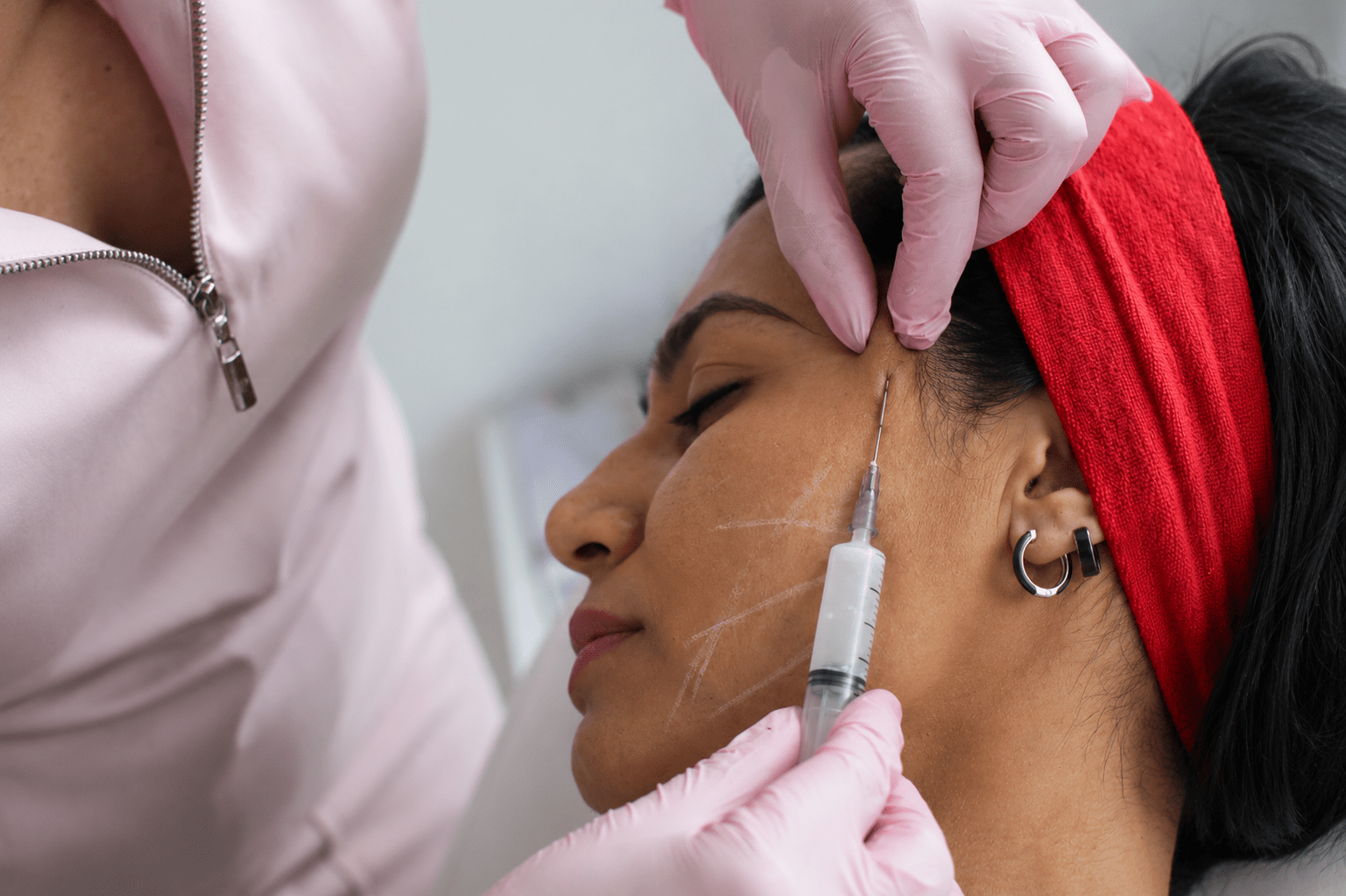
Regenerative and rejuvenation treatments include advanced dermatological procedures that may be considered to support and improve selected aspects of skin and hair quality.
Depending on the treatment and individual concern, these procedures may focus on:
At Pure Derma, the appropriate treatment is determined only after a dermatologist-led
assessment.
PRP and GFC Therapy are advanced treatments that may be considered for selected hair and skin concerns. While both approaches are commonly discussed in regenerative dermatology, the right treatment depends on the individual’s concern, skin or scalp condition, treatment history and overall suitability.
At Pure Derma, Vijayawada, we believe that choosing between PRP, GFC or another treatment should begin with a professional assessment.
Rather than selecting a procedure based on trends or recommendations alone, our dermatologist evaluates the underlying concern and helps determine the most appropriate treatment approach.
PRP stands for Platelet-Rich Plasma.
PRP Therapy involves processing a small sample of an individual’s own blood to obtain a platelet rich component, which may then be used as part of a dermatologist-guided treatment procedure.
PRP has applications in different areas of medicine and may be considered in dermatology for selected hair and skin-related concerns.
The treatment approach is personalised based on the concern being addressed.
However, not every individual experiencing hair thinning or changes in skin quality may be
suitable for PRP Therapy.
GFC stands for Growth Factor Concentrate.
GFC Therapy is another advanced treatment approach that may be considered for selected skin and hair concerns.
Depending on the treatment protocol and individual assessment, GFC Therapy may be incorporated into a personalised dermatological treatment plan.
GFC stands for Growth Factor Concentrate.
GFC Therapy is another advanced treatment approach that may be considered for selected skin and hair concerns.
Depending on the treatment protocol and individual assessment, GFC Therapy may be incorporated into a personalised dermatological treatment plan.
There is no universal answer.
PRP and GFC are different treatment approaches, and suitability depends on several individual factors.
For example, a person experiencing early hair thinning may require a different treatment plan from someone experiencing a long-standing hair concern.
Similarly, an individual seeking a skin-focused procedure may require a completely different approach.
Before recommending a treatment, the dermatologist may assess:

Hair thinning can occur for different reasons.
Changes in hair density may be influenced by several factors, and identifying the underlying
concern is an important part of treatment planning.
Before recommending PRP or GFC Therapy, the dermatologist may assess:
Based on the assessment, the dermatologist will determine whether PRP, GFC Therapy or
another treatment approach may be appropriate.
Depending on individual suitability, PRP or GFC-based procedures may also be considered as
part of selected skin rejuvenation plans.
The treatment approach depends on concerns such as:
The dermatologist will determine whether PRP or GFC Therapy is appropriate or whether another
procedure may better address the concern.
The number of sessions varies depending on:
A personalised treatment plan can only be determined after consultation.
The right treatment cannot be determined simply by choosing the latest or most popular
procedure.
At Pure Derma, our dermatologist will first understand your concern and assess whether PRP or
GFC Therapy may be appropriate.
Exosome-based treatments are an emerging area of regenerative and aesthetic dermatology.
They are increasingly discussed in relation to advanced treatment protocols for selected skin and hair concerns. However, exosome-based treatments are not a one-size-fits-all solution, and suitability depends on the specific concern, treatment protocol and product being considered.
At Pure Derma, any advanced treatment should begin with a thorough dermatological assessment.
Exosomes are microscopic extracellular vesicles involved in communication between cells.
In regenerative research and aesthetic medicine, exosome-based products are being explored and used in selected treatment settings.
The nature of exosome-based treatments can vary depending on:
For this reason, professional guidance is important before considering such a treatment.
Advanced treatments should not be selected simply because they are new or popular.
Before considering an exosome-based procedure, it is important to understand:
At Pure Derma, the focus is not simply on selecting an advanced treatment.
The focus is on selecting the right approach for the individual concern
Skin concerns can vary significantly from one individual to another.
Two people experiencing dullness or changes in skin quality may have completely different
underlying concerns.
Before recommending an advanced treatment, the dermatologist may assess:
Based on the assessment, the dermatologist will determine whether an exosome-based
approach or another skin rejuvenation procedure may be appropriate
Hair concerns should always be evaluated before beginning treatment.
Hair thinning, changes in density and other scalp-related concerns can have different causes.
The dermatologist may assess:
This helps determine the appropriate treatment approach.
Over time, the skin can experience changes in hydration, elasticity, texture and overall
appearance.
Some individuals may notice that their skin appears.
Profhilo is an advanced injectable treatment that may be considered for selected concerns.
related to skin hydration and overall skin quality.
At Pure Derma, Profhilo treatment is recommended only after a dermatologist assesses the individual’s skin and treatment goals
Profhilo is an injectable treatment used in aesthetic dermatology and is approached differently
from treatments primarily designed to add volume or alter facial contours.
It may be considered for individuals concerned about overall skin quality and hydration.
The treatment is selected based on the individual’s specific skin concern and suitability.
Depending on individual suitability, Profhilo may be considered for concerns related to:
The appropriate treatment should always be determined after professional assessment.
One of the most common questions is whether Profhilo and dermal fillers are the same.
They are different treatment approaches.
Some injectable procedures are primarily used to address specific concerns related to volume or contour, while Profhilo may be considered when the primary focus is on overall skin quality and hydration.
The right procedure depends on what the individual’s skin actually needs.
Profhilo may be considered for individuals experiencing concerns such as:
Before recommending treatment, the dermatologist may assess:
The dermatologist may recommend Profhilo or suggest another treatment if it is more suitable.
The treatment plan is personalised.
Depending on the individual’s skin condition, the dermatologist will determine:
Not every individual experiencing dullness or changes in skin quality requires the same
procedure.
You may be better suited for:
● Profhilo
● Skin Boosters
● PDRN Therapy
● NCTF
● Another skin rejuvenation procedure
Healthy-looking skin is influenced by several factors, including hydration, texture, elasticity and
overall skin quality.
Over time, some individuals may notice changes such as:
● Dull-looking skin
● Reduced radiance
● Dehydrated-looking skin
● Uneven texture
● Changes in overall skin quality
Skin boosters are advanced injectable treatments that may be considered as part of a
personalised skin rejuvenation plan.
Skin boosters are injectable treatments designed to address selected concerns related to skin hydration and overall skin quality.
Different products and treatment approaches may be used depending on the individual’s skin concern.
This is why a dermatologist assessment is important before selecting a procedure.
Depending on individual suitability, skin boosters may be considered for concerns related to:
Dull-looking skin can occur for several reasons.
It may be associated with factors such as :
The dermatologist will first assess the cause of the concern.
Not every individual experiencing dullness requires a skin booster
Hydration plays an important role in the appearance and quality of the skin.
However, the appearance of dehydrated skin can vary from person to person.
Before recommending treatment, the dermatologist will assess whether a skin booster is appropriate or whether another approach may better address the concern.
There are several advanced treatments available for skin rejuvenation.
Depending on the concern, the dermatologist may consider :
Not every skin concern requires an injectable treatment.
At Pure Derma, our dermatologist will first understand your concern before recommending a
procedure.
PDRN Therapy is an advanced treatment approach that may be considered for selected concerns
related to skin quality and rejuvenation.
PDRN stands for Polydeoxyribonucleotide.
Depending on the treatment protocol and the individual’s skin condition, PDRN-based treatments
may be incorporated into a dermatologist-guided skin rejuvenation plan.
PDRN is used in selected dermatological and aesthetic treatment approaches.
The way a PDRN-based treatment is incorporated into a treatment plan may vary depending on:
At Pure Derma, treatment suitability is determined through professional consultation.
Depending on individual suitability, PDRN-based treatments may be considered for selected
concerns related to:
PDRN Therapy is one of several advanced skin rejuvenation options.
Depending on your concern, the dermatologist may recommend:
● PDRN Therapy
● Skin Boosters
● Profhilo
● NCTF Treatment
● PRP
● Another treatment approach
The best treatment is not necessarily the newest or most popular one.
It is the treatment that is appropriate for your individual skin concern
Before recommending treatment, the dermatologist may assess:
An online description cannot determine whether PDRN Therapy is suitable for your skin.
A consultation allows the dermatologist to understand your concern and recommend the appropriate approach.
Changes in skin quality can occur gradually.
Some individuals may notice that their skin appears:
NCTF is an advanced skin-focused treatment that may be considered as part of a personalised
skin rejuvenation plan.
At Pure Derma, the treatment is recommended based on the individual’s specific skin concerns
and professional assessment.
NCTF is used as part of advanced aesthetic treatment protocols focused on selected concerns
related to skin quality and rejuvenation.
The treatment approach may vary depending on:
A dermatologist will determine whether NCTF is suitable for the individual.
Depending on individual suitability, NCTF may be considered for concerns related to:
There is no single “best” treatment for every skin concern.
An individual concerned about dullness may require a different treatment from someone
concerned about skin texture or hydration.
Depending on the concern, the dermatologist may recommend:
The dermatologist may assess:
The right treatment should be based on your individual skin assessment.
Not Sure Whether You Need NCTF or Another Skin Rejuvenation Treatment?
Consult Our Dermatologist for a Personalised Recommendation
As the face changes over time, some individuals may notice changes in skin appearance and facial contours.
These changes can vary depending on :
A Thread Lift is an advanced aesthetic procedure that may be considered for selected concerns related to facial ageing and skin appearance.
At Pure Derma, suitability is determined only after a professional facial assessment.
A Thread Lift is an aesthetic procedure in which specialised threads may be used as part of a
dermatologist-guided treatment approach.
The treatment plan depends on:
A Thread Lift should always be planned according to the individual’s anatomy and concerns.
Every individual has a unique facial structure.
A treatment plan should consider:
The goal should be to choose a treatment based on what is appropriate for the individual’s concern.
Before recommending treatment, the dermatologist will assess:
The Area of Concern
Which area is the individual concerned about?
Skin Quality
The condition and quality of the skin are important factors.
Facial Structure
Facial anatomy plays a significant role in treatment planning.
Treatment Goals
The dermatologist will understand what the individual hopes to address.
Overall Suitability
The final decision is based on whether a Thread Lift is appropriate for the individual.
A professional consultation is valuable because it helps avoid choosing a procedure
unnecessarily.
Depending on the concern, the dermatologist may recommend another approach.
From acne management and pigmentation correction to advanced skin rejuvenation treatments, Pure Derma Clinic provides personalized dermatology solutions that help you achieve healthier, glowing, and youthful skin.