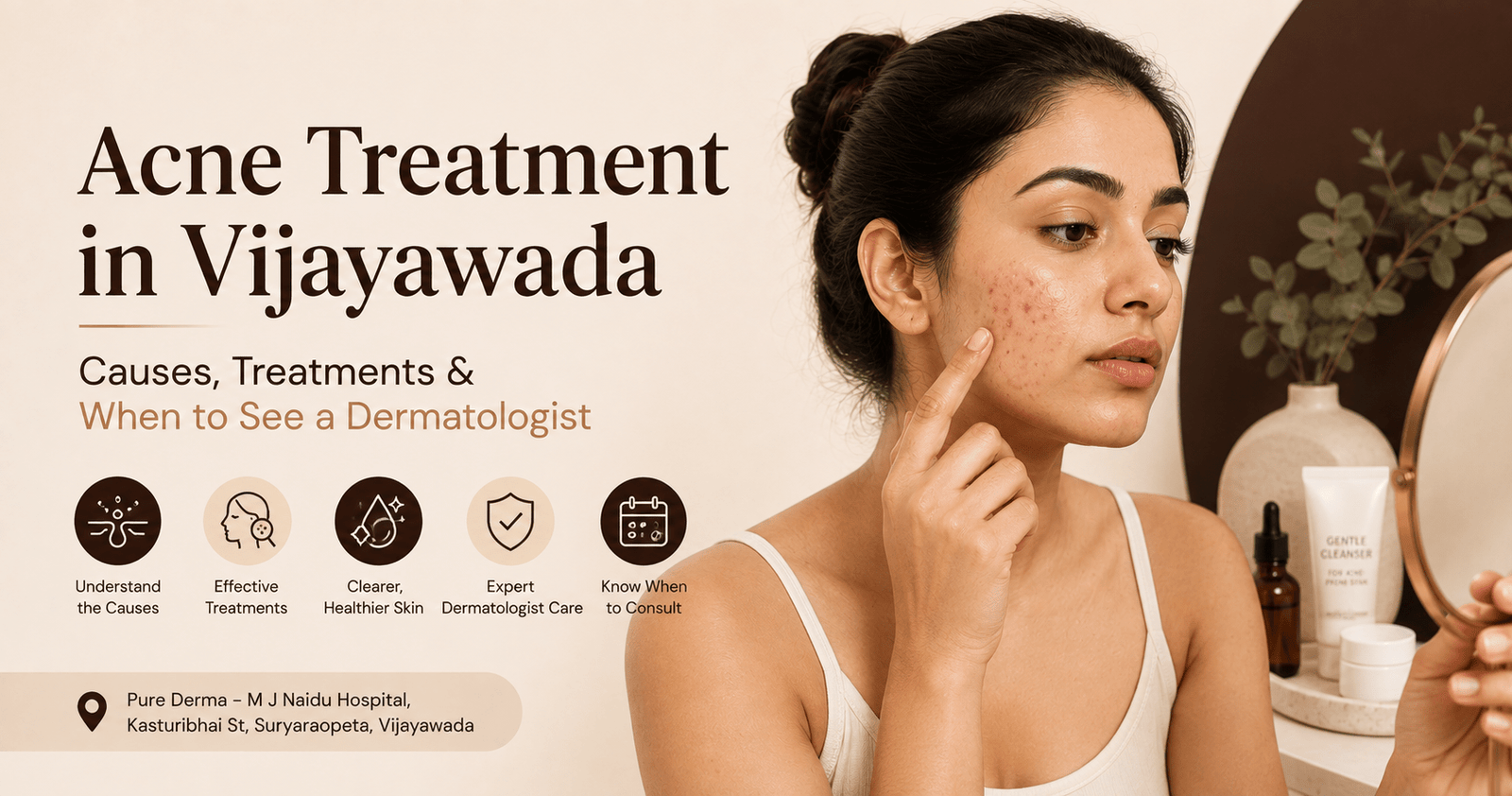
Acne is one of the most searched skin concerns in Vijayawada, and it’s easy to understand why. Between the city’s heat, humidity, pollution, and the everyday stress of work and study life, breakouts are a near-universal experience for teenagers navigating puberty and adults dealing with hormonal or stress-related flare-ups alike.
The encouraging truth is that acne, in almost all its forms, responds well to correct, consistent treatment. This guide takes a deep look at what causes acne, the mistakes that make it worse, and the professional treatment options available including how Dr. Monica Dauluri at Pure Derma approaches acne care.
Acne develops when hair follicles become clogged with a combination of excess oil (sebum) and dead skin cells. This creates an environment where acne-causing bacteria
(Cutibacterium acnes) multiply, triggering inflammation which is what causes the redness, swelling, and pain associated with pimples.
Acne isn’t a single condition; it exists on a spectrum, including:
Comedonal acne – blackheads and whiteheads, generally the mildest form.
Papulopustular acne – inflamed red bumps and pus-filled pimples.
Nodulocystic acne – deep, painful, cyst-like lesions that carry the highest risk of
scarring.
Hormonal acne – cyclical breakouts along the jawline and chin, linked to hormonal fluctuations.
1. Excess Oil (Sebum) Production
Overactive sebaceous glands produce more oil than the skin needs, clogging pores and creating a breeding ground for bacteria. Vijayawada’s humid climate tends to worsen this, particularly during summer months.
2. Hormonal Fluctuations
Hormonal acne is extremely common and shows up during puberty, around menstrual cycles, during pregnancy, and in conditions like PCOS/PCOD. It typically presents along the jawline, chin, and lower cheeks, often flaring predictably in a monthly pattern. Elevated androgen levels increase oil production, directly contributing to breakouts.
3. Clogged Pores & Improper Exfoliation
When dead skin cells aren’t shed efficiently, they combine with oil to block pores. Both under-exfoliating (allowing buildup) and over-exfoliating (irritating and inflaming skin) can worsen this cycle.
4. Diet and Lifestyle Factors
Emerging research links high-glycemic diets (sugary, refined-carb foods) and excessive
dairy consumption to increased acne severity in some individuals. Poor sleep and chronic stress also elevate cortisol, which can increase oil production and inflammation.
5. Bacterial Involvement
Once pores are clogged, C. acnes bacteria thrive in the oxygen-poor environment, triggering the immune response responsible for the redness and swelling of inflammatory acne.
6. Comedogenic Products
Heavy, pore-clogging skincare, sunscreen, or makeup is a frequently overlooked acne
trigger particularly for products not suited to oily or acne-prone skin.
7. Friction and Physical Irritation
Frequently touching the face, wearing tight helmets or masks, and resting your phone against your cheek can all contribute to localized breakouts (sometimes called “mechanical acne”).
8. Underlying Medical Conditions
Persistent, treatment-resistant acne especially when accompanied by irregular periods, excess hair growth, or weight changes can sometimes signal an underlying hormonal condition like PCOS, which benefits from a broader diagnostic approach.
Popping or picking pimples, which pushes bacteria and inflammation deeper into the
skin and significantly raises the risk of permanent scarring.
Over-washing the face, which strips natural oils and can trigger the skin to produce
even more oil in response.
Randomly trying over-the-counter products without understanding their skin type or
the specific type of acne they have.
Using unverified home remedies like toothpaste, lemon juice, or baking soda, which can irritate the skin barrier and worsen inflammation.
Ignoring acne for too long, allowing mild cases to progress into more severe, harder to-treat, scar-prone stages.
Discontinuing treatment too early, right as visible improvement begins, which often leads to acne returning.
Layering too many active ingredients at once (e.g., retinoids and strong acids together) without guidance, causing irritation rather than improvement.
Choosing based on advertising alone, without checking the doctor’s actual qualifications.
Prioritizing the cheapest option, which can mean compromised safety or diluted treatments.
Skipping research on the specific doctor who will be treating them, especially at
multi-doctor chains.
Not asking about complication protocols what happens if a reaction or side effect occurs.
Assuming all “skin clinics” are dermatologist-led, when some are run by non-medical staff offering cosmetic services without proper medical oversight.
Effective acne treatment is rarely one-size-fits-all. At Pure Derma, Dr. Monica Dauluri develops a plan based on your specific acne type, severity, skin sensitivity, and any underlying triggers.
Topical Treatments
Prescription-strength retinoids, benzoyl peroxide, azelaic acid, or antibiotic creams work to unclog pores, control oil production, and reduce bacterial load selected and dosed according to your skin’s tolerance.
Oral Medication
For moderate to severe or hormonal acne, oral antibiotics, hormonal therapies (such as anti androgens where appropriate), or isotretinoin may be prescribed, always under close dermatologist supervision due to the need for monitoring.
Medical-Grade Chemical Peels
Peels formulated and applied by a dermatologist help exfoliate clogged pores, reduce active breakouts, and improve overall texture far more controlled and safer than at-home peel kits, which carry a real risk of burns and pigmentation issues if misused.
Comedone Extraction
Safe, sterile removal of blackheads and whiteheads performed with proper tools and technique, avoiding the scarring, infection, and pigmentation risks that come with at-home popping.
Acne Scar Treatment
Once active breakouts are under control, treatments such as micro-needling, laser resurfacing, and targeted chemical peels can meaningfully reduce the appearance of acne scars, pitting, and post-acne dark marks. Scar treatment plans are typically staged over multiple sessions for gradual, safe improvement.
Hormonal Acne Management
For acne linked to hormonal imbalance or PCOS, treatment often combines dermatological care with relevant diagnostic tests and, where needed, coordination with other specialists addressing the root hormonal driver rather than only the visible breakouts.
Lifestyle and Skincare Guidance
Alongside medical treatment, patients receive practical guidance on suitable cleansers, non-comedogenic moisturizers and sunscreens, and general habits that support (rather than undermine) treatment progress.
Consider a professional consultation if you notice:
Acne that hasn’t improved after 6–8 weeks of consistent over-the-counter care.
Painful, deep, cystic breakouts.
Acne leaving behind dark marks, pitting, or scars.
Sudden, severe breakouts particularly alongside irregular periods, which may indicate
a hormonal cause.
Breakouts that are affecting your confidence, social life, or mental well-being.
Acne that keeps returning shortly after clearing, suggesting an unaddressed underlying trigger.
Earlier professional treatment generally means a lower risk of permanent scarring, faster results, and fewer wasted attempts with mismatched products.
Q1. Can acne be completely cured?
Acne can be effectively controlled, and in most cases substantially cleared, with the right treatment plan. Some individuals remain more prone to occasional flare-ups and benefit from periodic maintenance care.
Q2. How long does acne treatment take to show results? Most patients notice visible improvement within 4–8 weeks, though the full timeline depends on acne type, severity, and consistency with the prescribed routine.
Q3. Are acne scars permanent?
Not necessarily. Deeper scars are more challenging to treat, but options like micro-needling and laser resurfacing can significantly reduce their visibility with consistent sessions over time.
Q4. Is acne treatment safe during pregnancy?
Certain acne medications, including some oral treatments and retinoids, aren’t safe during pregnancy. It’s important to consult a dermatologist so pregnancy-safe alternatives can be recommended.
Q5. Why does my acne keep coming back even after it clears?
Recurring acne often
points to an unaddressed trigger such as a hormonal imbalance, comedogenic skincare products, or stopping treatment prematurely. A dermatologist can help identify the specific cause.
Q6. Can diet alone fix my acne? Diet can be a contributing factor for some people, but it’s rarely the sole cause. Combining dietary awareness with appropriate medical treatment tends to produce better, more reliable results.
Acne is frustrating and can affect far more than just your skin but it doesn’t have to control your confidence. With an accurate diagnosis and a treatment plan tailored to your specific triggers, clear skin is genuinely achievable. If over-the-counter products and home remedies haven’t worked, it’s a strong sign that it’s time to consult a professional.
Book an acne consultation with Dr. Monica Dauluri at Pure Derma call +91 93466 66788 or visit us at M J Naidu Hospital, Kasturibhai St, Suryaraopeta, Vijayawada.