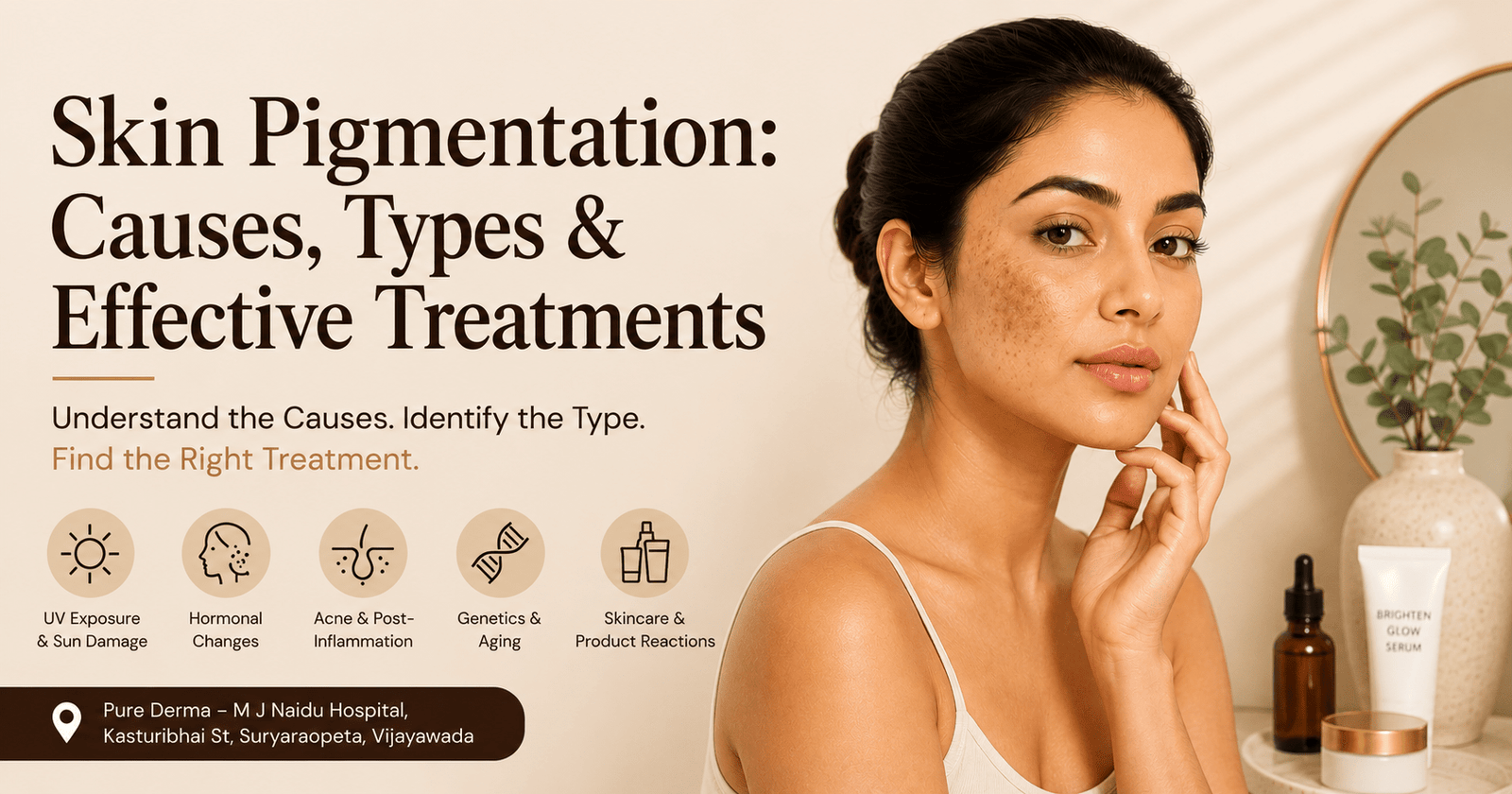

Uneven skin tone, dark patches, and stubborn spots are among the most common reasons patients visit a dermatologist and in a city like Vijayawada, with its intense year-round sun exposure, pigmentation is an especially frequent concern. If you’ve been searching for effective pigmentation treatment in Vijayawada, understanding the specific type and underlying cause of your pigmentation is the essential first step toward real, lasting improvement.
This guide covers what pigmentation is, why it happens, the different types dermatologists distinguish between, and the treatment options that actually work along with how Dr. Monica Dauluri at Pure Derma approaches pigmentation care.
Pigmentation refers to skin color, determined primarily by a pigment called melanin, produced by cells called melanocytes. When melanin production becomes uneven overproduced in certain areas or reduced in others it results in dark patches, spots, or lighter patches on the skin. Pigmentation issues can affect any skin tone but tend to be more visible and, in some cases, more stubborn on medium to deep skin tones, which are common in this region.
High UV index for most of the year drives excess melanin production as the skin’s natural protective response.
Heat and humidity can increase inflammation-related pigmentation, especially after acne or skin irritation.
Outdoor occupations and commuting without adequate sun protection increase cumulative UV exposure.
Limited daily sunscreen use remains common, allowing pigmentation to build up gradually over years.
1. Sun Exposure (UV Damage)
Prolonged, unprotected sun exposure is one of the leading pigmentation triggers in Vijayawada. UV rays stimulate melanocytes to produce more melanin as a defense mechanism, resulting in tanning, sunspots, and worsened melasma over time.
2. Hormonal Changes
Pregnancy, hormonal contraceptives, and hormonal fluctuations can trigger melasma a common pigmentation pattern appearing as symmetrical brown-to-grey patches, typically on the cheeks, forehead, nose bridge, and upper lip. Melasma is notoriously stubborn and tends to worsen with sun exposure, making sun protection central to its management.
3. Post-Inflammatory Hyperpigmentation (PIH)
Dark marks that linger after acne, cuts, insect bites, burns, or any skin irritation. This is one of the most common concerns among acne patients, as active breakouts often leave visible marks behind even after the acne itself has cleared.
4. Aging
As skin ages, melanin production can become irregular and clustered, leading to age spots or sun spots flat, well-defined brown marks typically appearing on the face, hands, and other frequently sun-exposed areas.
5. Genetics
Genetic predisposition plays a real role in how prone someone is to pigmentation and melasma, which is why some individuals develop noticeable pigmentation with relatively modest sun exposure while others don’t.
6. Skincare and Cosmetic Reactions
Certain products particularly those with harsh, irritating, or photosensitizing ingredients can trigger pigmentation as a reaction, especially in sensitive skin or when used without adequate sun protection.
7. Underlying Medical or Hormonal Conditions
In some cases, pigmentation changes can be linked to broader hormonal or metabolic conditions, which is one reason a proper dermatological evaluation matters rather than assuming it’s purely cosmetic.
Choosing based on advertising alone, without checking the doctor’s actual qualifications.
Prioritizing the cheapest option, which can mean compromised safety or diluted treatments.
Skipping research on the specific doctor who will be treating them, especially at
multi-doctor chains.
Not asking about complication protocols what happens if a reaction or side effect occurs.
Assuming all “skin clinics” are dermatologist-led, when some are run by non-medical staff offering cosmetic services without proper medical oversight.
1. Topical Treatments
Prescription-strength ingredients such as hydroquinone, tretinoin, azelaic acid, kojic acid, and vitamin C serums can help fade pigmentation gradually when selected and monitored by a dermatologist, who can adjust strength and combination based on your skin’s response.
2. Medical-Grade Chemical Peels
Peels performed by a dermatologist exfoliate the outer layers of skin, accelerating cell turnover and helping fade pigmentation more effectively and safely than at-home peel products, which carry a real risk of burns or worsened pigmentation if misused.
3. Laser Treatments
Targeted laser therapy can break down excess melanin deposits, making it particularly useful for stubborn sunspots and select types of pigmentation. Laser type, wavelength, and intensity need to be carefully matched to your skin tone using the wrong laser parameters on deeper skin tones can trigger new pigmentation or PIH, which is why professional assessment matters.
4. Microneedling
Improves overall skin texture and can enhance the penetration and effectiveness of topical pigmentation treatments when used as part of a combination approach.
5. Sun Protection (Non-Negotiable)
No pigmentation treatment produces lasting results without consistent sun protection. Dermatologists typically recommend a broad-spectrum sunscreen of SPF 30 or higher, reapplied through the day an especially important habit given Vijayawada’s UV intensity.
6. Customized Combination Therapy
Most patients see the best outcomes from a combination approach for example, a course
of chemical peels alongside targeted topical treatments and disciplined sun protection
rather than relying on any single method in isolation.
7. Maintenance Therapy
Because pigmentation, particularly melasma, has a tendency to recur, many patients benefit from a lighter, ongoing maintenance routine even after achieving significant improvement.
Consider a professional consultation if you notice:
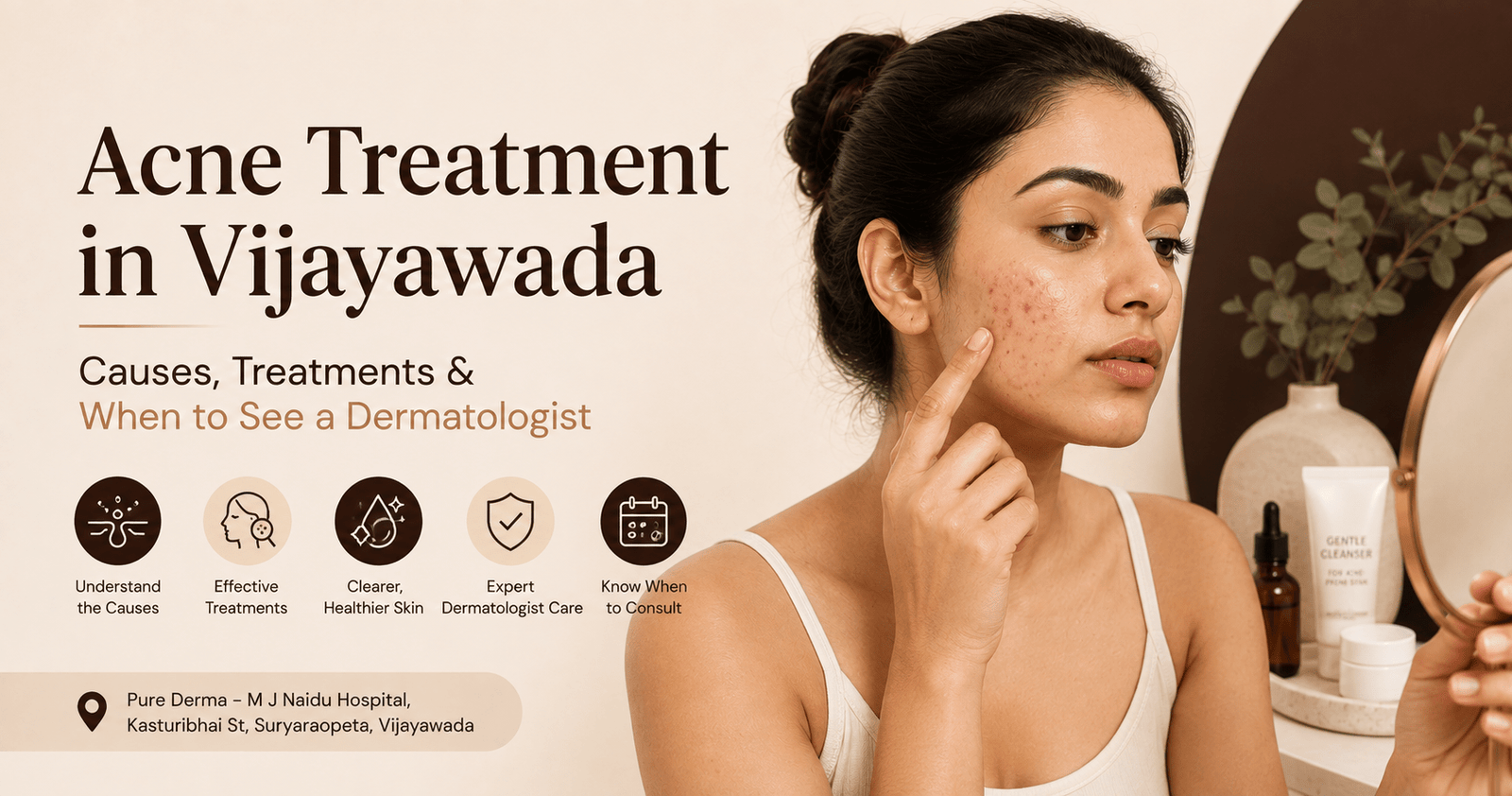
Acne that hasn’t improved after 6–8 weeks of consistent over-the-counter care.
Painful, deep, cystic breakouts.
Acne leaving behind dark marks, pitting, or scars.
Sudden, severe breakouts particularly alongside irregular periods, which may indicate
a hormonal cause.
Breakouts that are affecting your confidence, social life, or mental well-being.
Acne that keeps returning shortly after clearing, suggesting an unaddressed underlying trigger.
Earlier professional treatment generally means a lower risk of permanent scarring, faster results, and fewer wasted attempts with mismatched products.
Many over-the-counter “fairness” creams and unregulated home remedies can:
Irritate the skin and trigger or worsen pigmentation.
Contain unsafe levels of steroids or harmful bleaching agents, sometimes causing long term skin damage.
Offer only temporary lightening that rebounds once discontinued.
Delay proper treatment, allowing pigmentation to become more established and harder to treat over time.
A dermatologist-led approach ensures the treatment actually matches the specific type and depth of pigmentation present something that’s genuinely difficult to assess without clinical training.
Q1. How long does pigmentation treatment take to show results?
Most patients begin noticing improvement within 4–6 weeks, though melasma and deeper pigmentation often take longer and may require ongoing maintenance sessions for sustained results.
Q2. Can pigmentation come back after treatment?
Yes, particularly without consistent sun protection. This is why dermatologists emphasize daily sunscreen use as an essential part of treatment, not an optional add-on.
Q3. Is laser treatment safe for all skin tones?
Not all lasers are suitable for all skin types. A dermatologist will assess your skin tone and select an appropriate treatment and settings to minimize the risk of worsening pigmentation.
Q4. Can I treat melasma and acne-related pigmentation the same way?
No. Melasma is largely hormonally driven and often requires a different, more cautious approach than post
acne dark spots, which is one reason professional diagnosis is important before starting treatment.
Q5. Are home remedies like lemon juice safe for pigmentation?
Generally not recommended. Lemon juice and similar acidic home remedies can irritate the skin barrier and, combined with sun exposure, can actually worsen pigmentation rather than improve it.
Q6. Does pigmentation treatment hurt?
Most treatments, including peels and topical therapy, cause minimal to no discomfort. Laser treatments may cause mild, temporary sensations, which your dermatologist will explain beforehand.
Pigmentation can be frustrating and slow to resolve, but it’s rarely untreatable. The key lies in correctly identifying its specific type and underlying cause before starting any treatment self-treating based on guesswork is one of the most common reasons people don’t see results. With a personalized, dermatologist-guided plan, a more even and healthy-looking skin tone is genuinely achievable.
Book a pigmentation consultation with Dr. Monica Dauluri at Pure Derma call +91 93466 66788 or visit us at M J Naidu Hospital, Kasturibhai St, Suryaraopeta, Vijayawada.