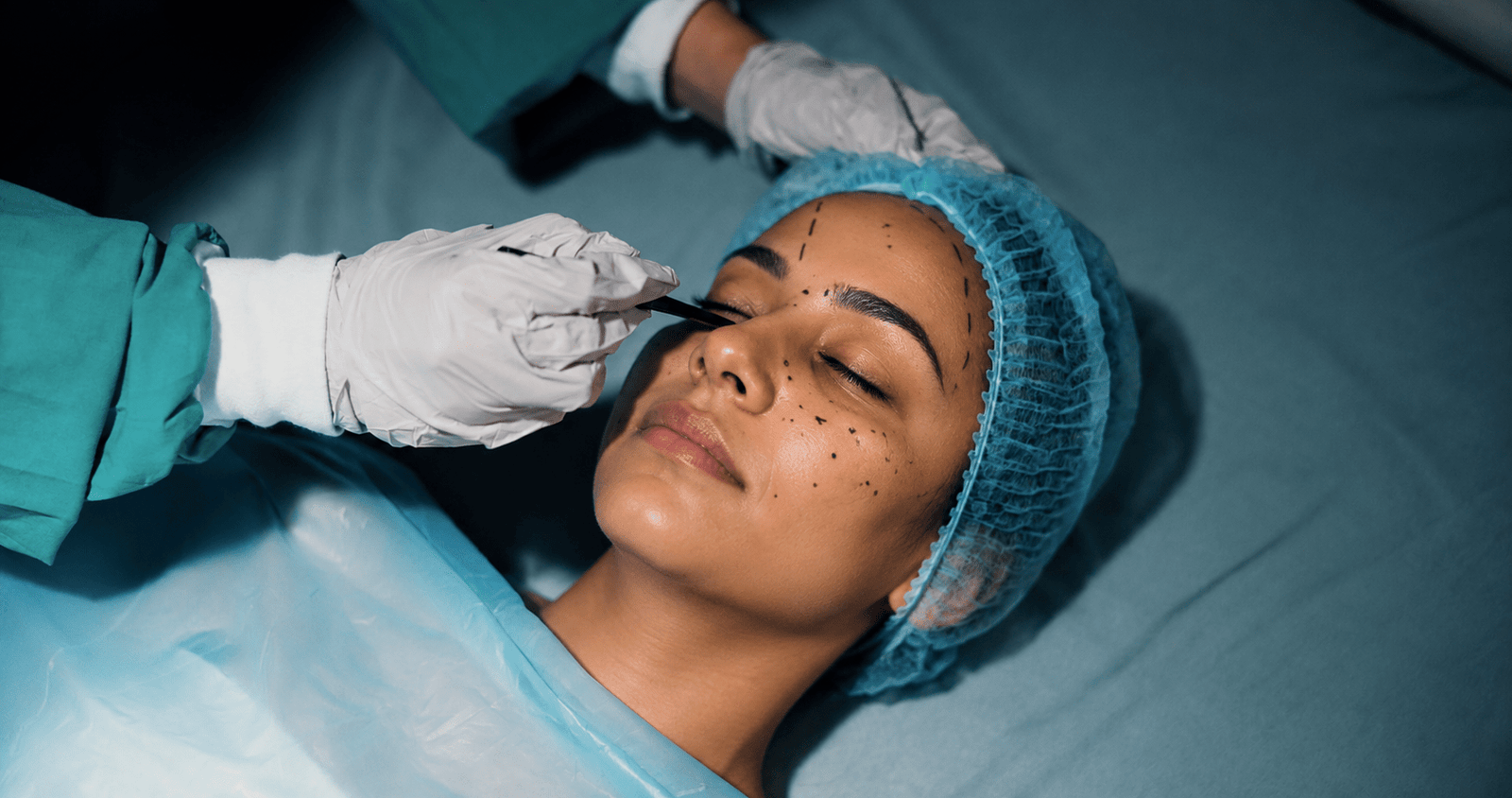
Dermatosurgery involves specialised dermatological procedures used for the diagnosis, removal and treatment of selected skin lesions and conditions.
At Pure Derma, Vijayawada, every procedure begins with a proper dermatological assessment.
Not every mole, wart, skin tag, lump or skin change requires removal, and not every skin lesion should be treated in the same way.
Our dermatologist evaluates the concern to determine:
Dermatologist-Guided Assessment and Treatment of Moles Moles are common skin growths that can vary in size, colour, shape and appearance.
Some people may wish to have a mole assessed because of its appearance, while others may be concerned about a change they have noticed.
At Pure Derma, Vijayawada, mole removal begins with a professional dermatological examination.
Before considering removal, it is important to understand the nature of the mole.
Dermatologist-Guided Assessment and Treatment of Moles Moles are common skin growths that can vary in size, colour, shape and appearance.
Some people may wish to have a mole assessed because of its appearance, while others may be concerned about a change they have noticed.
At Pure Derma, Vijayawada, mole removal begins with a professional dermatological examination.
Before considering removal, it is important to understand the nature of the mole.
Some moles remain unchanged for years, while others may develop changes that should be assessed by a dermatologist.
A dermatologist consultation may be recommended if you notice changes such as:
A professional assessment helps determine the appropriate next step.
Before recommending a procedure, the dermatologist evaluates the mole and considers:
Depending on the assessment, the dermatologist will determine whether removal is appropriate
and which procedure may be suitable.
Not every mole should be removed without first being examined.
The first priority is to understand what the skin lesion is.
Depending on the assessment, the dermatologist may recommend:
Post-procedure care depends on the type of procedure performed and the treatment area.
Your dermatologist will provide appropriate instructions regarding:
Warts are common skin growths that can appear on different parts of the body.
They may vary in appearance, size and location. Some warts may remain unchanged, while others may increase in number or cause discomfort depending on their location.
At Pure Derma, the first step is identifying whether the growth is actually a wart and determining the most appropriate treatment approach
A wart is a type of skin growth that may appear as a rough or raised lesion.
Warts can occur in different areas, including:
The appearance and treatment approach can vary depending on the type and location of the
lesion.
Not every raised skin growth is a wart.
Some skin lesions may look similar but require a different approach.
A dermatologist can examine the lesion and determine:
The appropriate treatment depends on several factors, including:
Your dermatologist will recommend the appropriate procedure based on your individual condition.
A professional assessment may be useful if:
Skin tags are common, usually small, soft skin growths that may appear in different areas of the
body.
Although they are often noticed for cosmetic reasons, it is important to have any skin growth properly assessed before removal.
At Pure Derma, Vijayawada, the dermatologist evaluates the lesion and determines whether it is a skin tag and whether removal is appropriate.
A skin tag is a small skin growth that may appear in areas where there is frequent friction.
They may occur in areas such as:
Skin tags can vary in:
Not every small skin growth is necessarily a skin tag.
A professional assessment helps identify the nature of the lesion before treatment.
The dermatologist may evaluate:
Depending on the lesion and its location, the dermatologist will determine the appropriate
removal procedure.
The treatment approach may vary based on:
A dermatologist can assess whether removal is appropriate.
However, the procedure should be selected after examining the lesion and understanding the individual’s concern.
Aftercare instructions depend on the procedure performed and the treatment area.
Your dermatologist will guide you regarding:
A lump or bump beneath the skin should always be properly evaluated before treatment.
What may appear to be a cyst can have different characteristics, and the appropriate treatment depends on the nature of the lesion.
At Pure Derma, a dermatologist assesses the concern before recommending a procedure.
The term “sebaceous cyst” is commonly used to describe certain types of cyst-like lumps
beneath or within the skin.
These lesions may vary in:
A professional examination helps determine the nature of the lump.
Consider consulting a dermatologist if you notice:
A dermatologist can determine whether the lesion requires treatment, observation or further evaluation.
Before recommending removal, the dermatologist assesses:
Based on the assessment, the appropriate treatment approach can be determined.
Not necessarily.
The appropriate next step depends on the dermatologist’s evaluation.
Depending on the condition, the dermatologist may recommend.
Aftercare depends on the procedure performed and the area treated.
The dermatologist will provide instructions regarding appropriate care and follow-up
Sometimes, a skin condition cannot be fully diagnosed based on visual examination alone.
In selected situations, a dermatologist may recommend a skin biopsy to obtain additional information about a skin lesion or condition.
At Pure Derma, a skin biopsy is recommended only when the dermatologist determines that it may be useful for further evaluation.
A skin biopsy is a diagnostic procedure in which a small sample of skin may be taken for further examination.
The sample may be evaluated to help provide additional information about a skin concern.
A skin biopsy can be an important part of the diagnostic process for selected conditions.
A dermatologist may consider a skin biopsy when further evaluation is required for a particular
skin lesion or condition.
The decision depends on:
Many skin conditions can have similar appearances.
A biopsy may provide additional information that helps the dermatologist better understand the condition.
This can assist with:
The exact procedure depends on:
The dermatologist will explain the procedure and appropriate aftercare.
After the procedure, the dermatologist will provide instructions regarding:
Further steps depend on the reason for the biopsy and the clinical evaluation.
Vitiligo is a skin condition characterised by areas of depigmentation, resulting in lighter or white patches on the skin.
The appearance, progression and stability of vitiligo can vary significantly from one individual to another.
While many individuals may be managed using non-surgical approaches, selected cases may be evaluated for surgical treatment.
At Pure Derma, suitability for vitiligo surgery is determined only after a detailed dermatological assessment.
Vitiligo is a condition in which areas of the skin lose pigmentation.
The condition may affect:
No.
Vitiligo surgery is not appropriate for every individual with vitiligo.
Suitability depends on several important factors.
The dermatologist may assess:
In selected cases, surgical procedures may be considered as part of a comprehensive vitiligo
treatment plan.
The decision should only be made after professional evaluation.
The dermatologist will determine:
Vitiligo is a complex condition, and treatment planning should be individualised.
Two people with vitiligo may have completely different:
Therefore, a surgical procedure should never be selected without assessing the individual’s condition.
Depending on the assessment, the dermatologist may recommend:
From acne management and pigmentation correction to advanced skin rejuvenation treatments, Pure Derma Clinic provides personalized dermatology solutions that help you achieve healthier, glowing, and youthful skin.
